
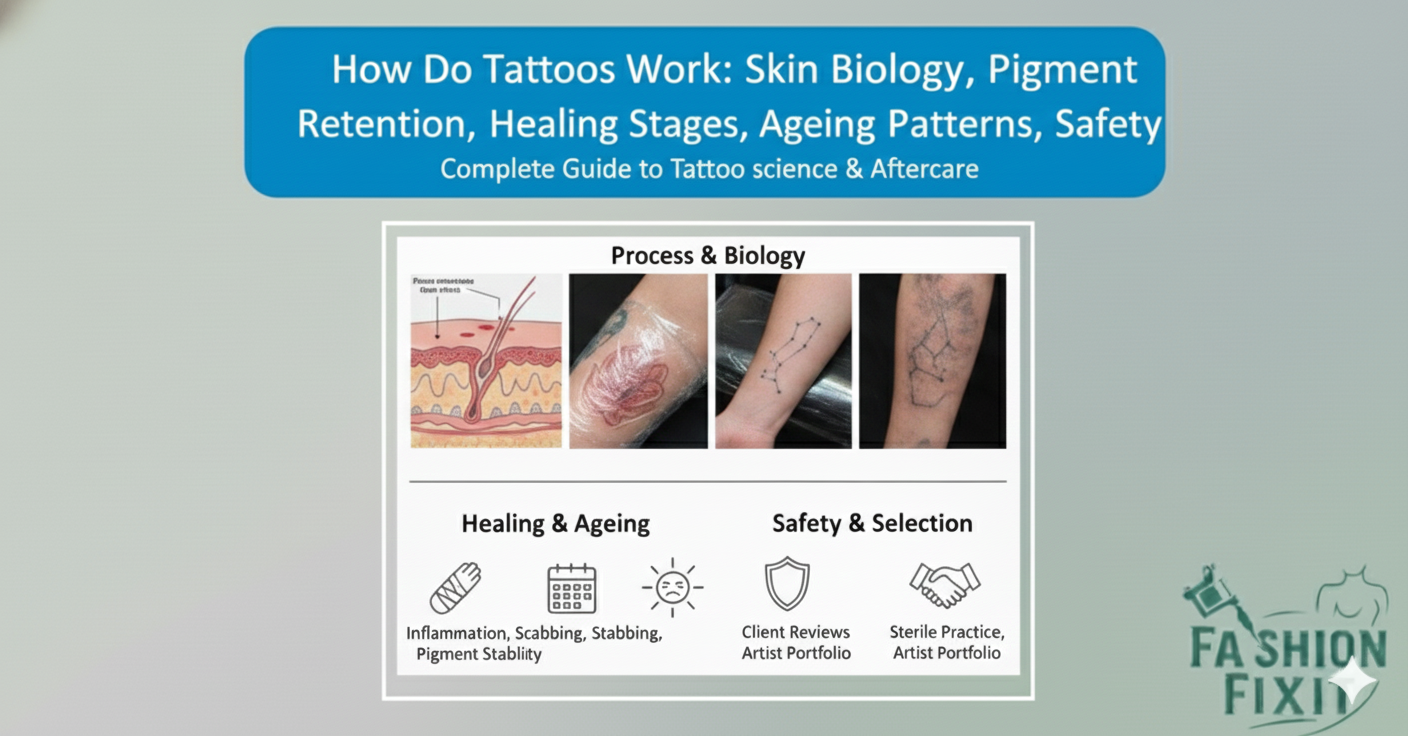
Tattoos function through dermal pigment placement, immune sequestration, collagen interaction, and long-term skin biology that collectively determine clarity, stability, ageing patterns, and healing behaviour. Tattoo needles deposit pigment into the dermis. Macrophages and fibroblasts retain pigment through continuous cellular cycling. Pigment chemistry, particle size, skin type, and tattoo style change saturation, edge precision, and long-term structural stability. Healing progresses through oozing, scabbing, flaking, and dermal reconstruction, and each stage determines pigment settlement. Pain levels differ across body areas because nerve density, dermal thickness, adipose volume, and bone proximity influence nociceptor activation. Aftercare supports longevity by regulating moisture, reducing microbial activity, controlling inflammation, and preventing ultraviolet degradation. Tattoo ageing develops through epidermal turnover, pigment diffusion, collagen loss, and environmental exposure. Artist and studio selection relies on portfolio accuracy, hygiene standards, regulatory compliance, and consultation quality. Skin preparation, equipment safety, and touch-up strategies reinforce dermal pigment structures across time.
What Is a Tattoo, What Does a Tattoo Actually Do Beneath the Skin?
A tattoo is a permanent dermal pigment structure formed when tattoo needles deposit pigment into the dermis where macrophages and fibroblasts retain pigment particles through long-term cellular sequestration. United States dermatology and immunology research from 2025 verifies dermal pigment retention as the governing mechanism of tattoo permanence.
Tattoo procedure forms a dermal pigment structure through repeated needle perforation. Tattoo machines create 50–3000 perforations per minute. Needle depth ranges between 1.0–2.0 millimetres. According to 2025 Cutaneous Biology Division analyses from leading United States universities, dermal cell turnover progresses more slowly than the 28-day epidermal renewal cycle, so dermal pigment structures remain stable while superficial keratinocytes regenerate.
A tattoo becomes permanent through macrophage-driven pigment sequestration. Macrophages engulf 20–30% of pigment volume during the initial inflammatory phase according to 2025 Immunodermatology Department datasets. Macrophage apoptosis releases pigment particles. Surrounding macrophages and fibroblasts re-capture released particles. Sequential re-capture cycles preserve tattoo visibility across long timeframes.
Tattoo pigment structure stabilises further through fibroblast anchoring. Fibroblasts integrate 10–20% of pigment into collagen bundles according to 2025 dermal-matrix characterisation studies from national skin-biology research centres. Collagen alignment sharpens linework edges. Collagen density stabilises shading gradients. Dermal architecture therefore determines tattoo clarity.
Tattoos influences lymphatic pathways. Pigment particles between 40–300 nanometres remain dermal. Pigment particles under 60 nanometres migrate into lymphatic vessels. 2025 United States dermatotoxicology research reports pigment detection in regional lymph nodes and documents quantifiable pigment–immune signalling interactions across healthy adult cohorts.
A tattoo functions across aesthetic, cultural, commemorative, and medical contexts in the United States. Examples include fine-line compositions, traditional motifs, memorial inscriptions, radiation-field markers, and cosmetic camouflage for dermal irregularities.
How Does Tattoo Ink Enter the Skin and Settle in the Dermis?
Tattoo ink enters the skin through needle perforation that places pigment into the dermis where macrophages and fibroblasts retain pigment particles through continuous cellular sequestration. Tattoo machines create 50–3000 perforations per minute and deliver pigment at controlled depths between 1.0–2.0 millimetres to form a stable dermal pigment structure.
Tattoo Ink Entry Into the Dermis
Tattoo ink enters the dermis through epidermal displacement created by repeated needle penetration. Needle groups form micro-channels that direct pigment into dermal collagen networks. Dermal architecture provides structural density and low cellular turnover, so pigment enters a stable biological environment that supports long-term retention.
Tattoo Ink Settlement Within Dermal Tissue
Tattoo ink settles within dermal tissue through macrophage and fibroblast sequestration of pigment particles. Macrophages engulf a significant portion of pigment during the inflammatory phase. Macrophage apoptosis releases pigment, and surrounding macrophages and fibroblasts re-capture pigment, creating uninterrupted retention cycles that maintain tattoo visibility.
Pigment Size and Dermal Distribution
Tattoo pigment size determines dermal localisation and lymphatic movement. Pigment particles between 40–300 nanometres remain anchored within dermal collagen bundles. Pigment particles under 60 nanometres enter lymphatic pathways. Dermal retention dominates because most tattoo pigments contain particle sizes aligned with collagen-based anchoring structures.
Stability Factors for Tattoo Ink Over Time
Tattoo ink stability relies on dermal architecture, collagen density, and immune retention cycles. Fibroblasts integrate pigment into collagen bundles to enhance structural sharpness. Macrophage re-capture cycles reinforce pigment localisation. Slow dermal regeneration preserves pigment patterns, so tattoo clarity remains consistent across long durations.
How Does a Tattoo Machine Function During the Tattooing Process?
A tattoo machine functions by driving grouped needles in rapid vertical motion to deliver pigment into the dermis where pigment particles form a permanent dermal structure. Electromagnetic or rotary mechanisms generate consistent needle oscillation that controls depth, speed, and pigment flow during tattoo application.
Mechanical Operation of a Tattoo Machine
A tattoo machine operates through continuous needle oscillation produced by an electromagnetic coil system or a rotary motor. Electromagnetic systems move an armature bar that lifts and drops needle groupings. Rotary systems transfer circular motor rotation into linear needle motion. Both mechanisms maintain predictable perforation patterns across the skin surface.
Needle Motion and Depth Regulation
A tattoo machine regulates needle depth to ensure pigment placement between 1.0–2.0 millimetres within dermal tissue. Depth regulators, tube tips, and machine stroke length maintain consistent penetration. Accurate depth targeting prevents epidermal blowout and ensures pigment reaches the dermal layer where retention occurs.
Pigment Delivery Through Needle Channels
A tattoo machine delivers pigment through capillary action along needle channels. Needles carry pigment down each perforation path into the dermis. Repeated perforations between 50–3000 cycles per minute increase pigment density and produce uniform saturation. Dermal collagen bundles then stabilise pigment placement.
Machine Speed and Line Precision
A tattoo machine controls speed to optimise line precision and shading density. Higher speeds support smooth linework. Lower speeds increase pigment deposit during shading. Speed adjustments synchronise needle motion with skin resistance to maintain structural clarity of tattoo patterns.
Electrical Control and Operator Technique
A tattoo machine responds to voltage adjustments that modify stroke strength, needle speed, and overall performance. Lower voltage creates softer strokes suitable for shading. Higher voltage strengthens penetration suitable for lining. Skilled operators balance voltage, angle, tension, and hand stability to produce consistent dermal pigment structures.
How Does Tattoo Ink Get Deposited and Stay in the Skin Long-Term?
Tattoo ink gets deposited through needle perforation that places pigment into the dermis and stays in the skin long-term through macrophage and fibroblast sequestration of pigment particles. Dermal placement and continuous immune retention create a stable pigment structure.
Dermal Deposition of Tattoo Ink
Tattoo ink reaches the dermis through repeated needle penetration that forms micro-channels for pigment transfer. Needle groups create 50–3000 perforations per minute and deliver pigment to a depth of 1.0–2.0 millimetres. Dermal collagen density and reduced cellular turnover support long-term pigment localisation.
Cellular Retention of Tattoo Pigment
Tattoo ink remains in the skin through macrophage capture of pigment particles during the inflammatory phase. Macrophage apoptosis releases pigment. Neighbouring macrophages and fibroblasts re-capture pigment, producing uninterrupted sequestration cycles that maintain visible pigment structures across long durations.
Fibroblast Anchoring and Structural Stability
Tattoo ink gains stability through fibroblast anchoring within collagen bundles. Fibroblasts integrate 10–20% of pigment volume into dermal matrix fibres. Collagen alignment sharpens line borders and enhances shading uniformity. Dermal architecture strengthens pigment retention.
Pigment Particle Size and Dermal Persistence
Tattoo ink persistence depends on pigment particle size within dermal tissue. Pigment particles between 40–300 nanometres remain within collagen networks. Pigment particles under 60 nanometres enter lymphatic pathways, while larger particles remain embedded in dermal structures.
Long-Term Visibility of Tattoo Pigment
Tattoo ink remains visible long-term because dermal tissue regenerates slowly and immune sequestration cycles repeat continuously. Slow dermal turnover preserves pigment structures. Re-capture cycles reinforce pigment localisation. Collagen organisation maintains visual clarity.
What Is Tattoo Ink Made Of and How Do Different Pigments Interact With Skin?
Tattoo ink is a pigment suspension containing colour particles and carrier fluids that enter the dermis where pigment chemistry, particle size, macrophage uptake, and fibroblast anchoring control dermal interaction and long-term colour stability. Tattoo ink composition determines dermal behaviour and retention patterns.
Composition Structure of Tattoo Ink
Tattoo ink contains pigment particles, carrier fluids, stabilisers, and dispersants that distribute colour evenly during needle delivery. Pigment particles range between 40–300 nanometres. Carrier fluids such as glycerin or ethanol regulate viscosity. Stabilisers prevent particle aggregation. Dispersants enhance pigment flow through needle channels.
Pigment Categories Used in Tattoo Ink
Tattoo ink pigments derive from carbon compounds, metal oxides, organic dyes, and titanium dioxide with each category producing distinct dermal performance.
The pigment categories are given below:
- Carbon pigments: high-opacity black particles
- Iron oxide pigments: stable earth-toned particles
- Copper and chromium pigments: blue–green particles with strong dermal affinity
- Organic pigments: azo and quinacridone particles producing saturated reds and yellows
- Titanium dioxide pigments: white particles increasing opacity
These pigment groups differ in optical density, dermal absorption patterns, and immune activation tendencies.
Dermal Interaction of Pigments
Tattoo pigment interaction with skin depends on macrophage uptake and fibroblast anchoring within dermal collagen bundles. Macrophages engulf pigment during inflammatory response. Fibroblasts integrate pigment into collagen fibres, creating structural alignment. Continuous sequestration cycles maintain dermal pigment patterns.
Influence of Pigment Chemistry on Skin Behaviour
Tattoo pigment chemistry shapes dermal response, colour stability, and retention strength. Carbon pigments disperse uniformly and sharpen linework. Iron oxides stabilise brown and red tones. Copper-based pigments produce strong blue–green saturation. Organic azo pigments create vivid hues with higher immune reactivity frequencies. Titanium dioxide increases opacity but reduces laser absorption.
Particle Size and Long-Term Interaction
Tattoo pigment particle size dictates dermal localisation and migration. Particles above 40 nanometres remain within collagen networks. Particles under 60 nanometres enter lymphatic pathways. Larger particles embed deeper within fibroblast-collagen structures and form long-lasting colour reservoirs.
How Does the Immune System Respond to Tattoo Pigment?
The immune system responds to tattoo pigment through macrophage activation, pigment engulfment, fibroblast anchoring, and continuous pigment re-sequestration that preserves dermal colour patterns. Immune recognition, inflammatory signalling, and long-term cellular cycling shape tattoo pigment behaviour within dermal tissue.
Initial Immune Recognition of Tattoo Pigment
The immune system identifies tattoo pigment as foreign material immediately after dermal penetration. Needle perforation triggers an inflammatory response. Neutrophils arrive first to clear debris. Macrophages follow and begin pigment phagocytosis. Dermal tissue forms a stabilised inflammatory microenvironment that supports pigment integration.
Macrophage Sequestration of Pigment Particles
Macrophages engulf a substantial portion of tattoo pigment and store pigment particles within intracellular vacuoles. Pigment-filled macrophages remain in the dermis. Macrophage apoptosis releases pigment. Neighbouring macrophages re-capture released pigment, establishing continuous sequestration cycles that maintain colour stability.
Fibroblast Anchoring in Dermal Collagen
Fibroblasts anchor pigment particles within collagen bundles to reinforce dermal pigment structures. Fibroblast integration strengthens line edges and shading gradients. Collagen organisation aligns pigment distribution. Dermal architecture therefore supports long-term pigment localisation.
Immune Modulation by Pigment Chemistry
The immune system responds differently to pigment chemistries based on molecular composition and particle size. Carbon pigments generate low inflammatory activity. Iron oxide pigments produce moderate immune engagement. Azo pigments create stronger inflammatory signals. Particle sizes under 60 nanometres increase lymphatic movement and immune exposure. Larger particles remain stabilised within dermal collagen.
Long-Term Immune Cycling and Tattoo Permanence
The immune system maintains tattoo permanence through repeated macrophage re-sequestration, fibroblast retention, and slow dermal regeneration. Dermal turnover rates preserve pigment structures. Persistent cellular cycling reinforces colour stability. Dermal immune interaction functions as the primary mechanism for long-term tattoo preservation.
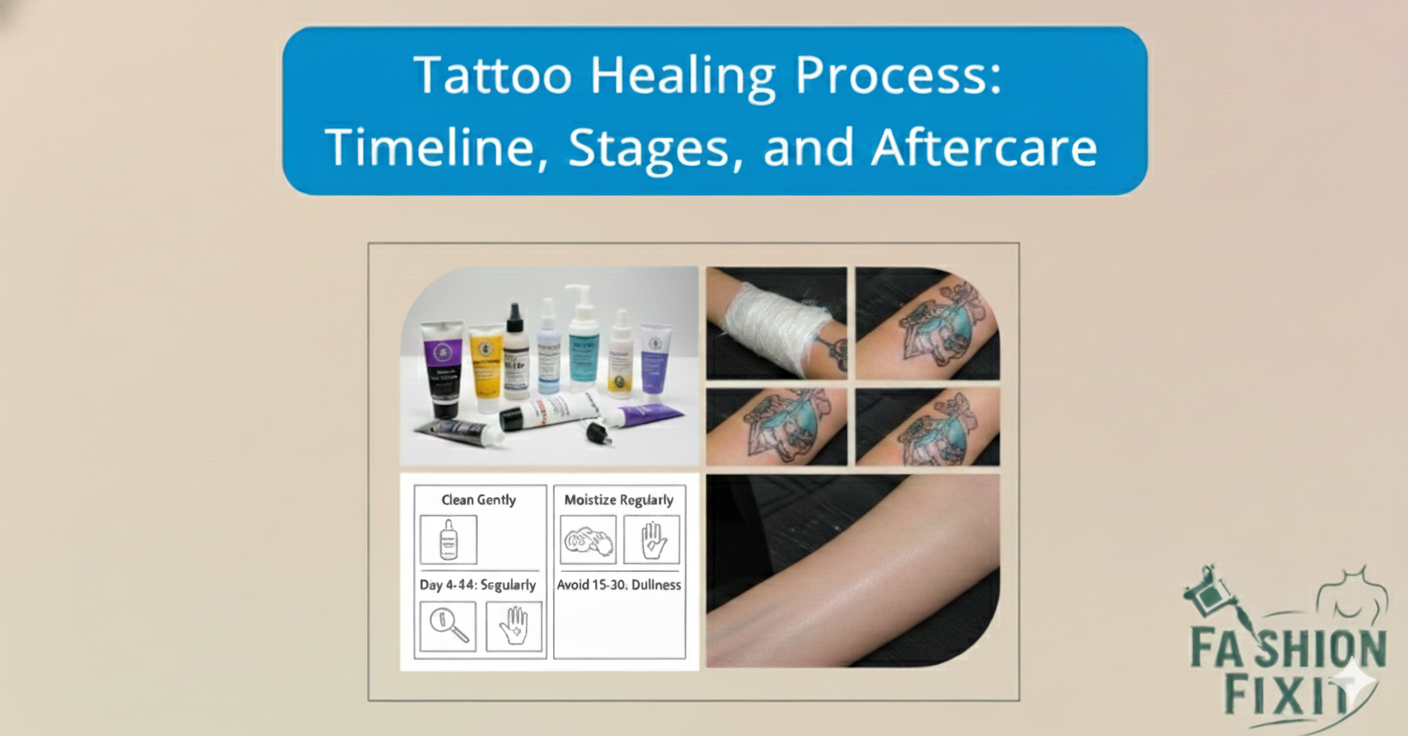
How Does Tattoo Healing Work From Day One Through Full Maturation?
Tattoo healing works through inflammatory, proliferative, structural, and maturation phases that repair epidermal layers while stabilising dermal pigment through macrophage sequestration and fibroblast anchoring. Tattoo healing follows a linear biological pathway that maintains pigment localisation and strengthens dermal architecture.
Stages of Tattoo Healing
Tattoo healing progresses through four sequential stages that coordinate surface repair with internal dermal reconstruction.
The four healing stages are given below:
- Oozing stage: plasma release, immune activation, and early pigment positioning
- Scabbing stage: protective crust formation as keratinocytes regenerate
- Flaking stage: epidermal shedding and surface renewal
- Dermal reconstruction stage: collagen alignment, fibroblast anchoring, and long-term pigment retention
These stages progress in fixed order because epidermal turnover and dermal reorganisation follow structured biological timelines.
Inflammatory Phase: Day One to Day Three
Tattoo healing begins with an inflammatory phase that removes debris and initiates pigment sequestration. Neutrophils clear disrupted tissue. Macrophages engulf pigment particles and establish early retention. Plasma films form across the epidermal surface. Vasodilation increases nutrient delivery and accelerates cellular response.
Proliferative Phase: Day Three to Day Fourteen
Tattoo healing advances into a proliferative phase that rebuilds epidermal continuity and reinforces dermal structure. Keratinocytes migrate across needle channels. Collagen fibres reorganise around pigment particles. Fibroblasts anchor pigment within matrix bundles. Surface peeling reflects epidermal renewal while pigment remains stable within dermal tissue.
Structural Consolidation: Week Two to Week Six
Tattoo healing continues with structural consolidation that sharpens pigment distribution and stabilises tissue integrity. Epidermal layers thicken. Fibroblasts strengthen collagen scaffolding. Macrophage cycling stabilises pigment localisation. Scabbing resolves as epidermal opacity decreases and surface clarity improves.
Maturation Phase: Week Six to Month Six
Tattoo healing completes with a maturation phase that finalises dermal organisation and pigment clarity. Collagen fibres align along dermal tension lines. Fibroblast anchoring defines linework precision and shading gradients. Macrophage re-sequestration maintains pigment retention as dermal turnover slows.
Average Healing Durations
Tattoo healing follows predictable surface and internal timelines.
The average healing durations are given below:
- Oozing: 24–72 hours
- Scabbing: day 3 to day 10
- Flaking: day 7 to day 21
- Dermal reconstruction: week 3 to month 6
Surface healing finishes within two to three weeks. Dermal maturation continues for months because collagen remodelling progresses slowly.
Influence of Aftercare on Ink Retention
Tattoo aftercare influences ink retention by protecting epidermal repair and preventing pigment disturbance during early healing. Moisture balance reduces excessive scabbing. Controlled cleansing limits bacterial activity. Barrier protection reduces friction. These factors preserve pigment sequestration and support fibroblast anchoring.
Differences Between External Healing and Internal Dermal Healing
Tattoo healing differs between external epidermal repair and internal dermal reconstruction because each layer completes independent biological processes. External healing includes oozing, scabbing, and flaking as keratinocytes regenerate. Internal healing includes macrophage cycling, collagen realignment, fibroblast anchoring, and pigment stabilisation. External healing resolves within weeks. Internal healing continues for months as pigment integrates fully within collagen networks.
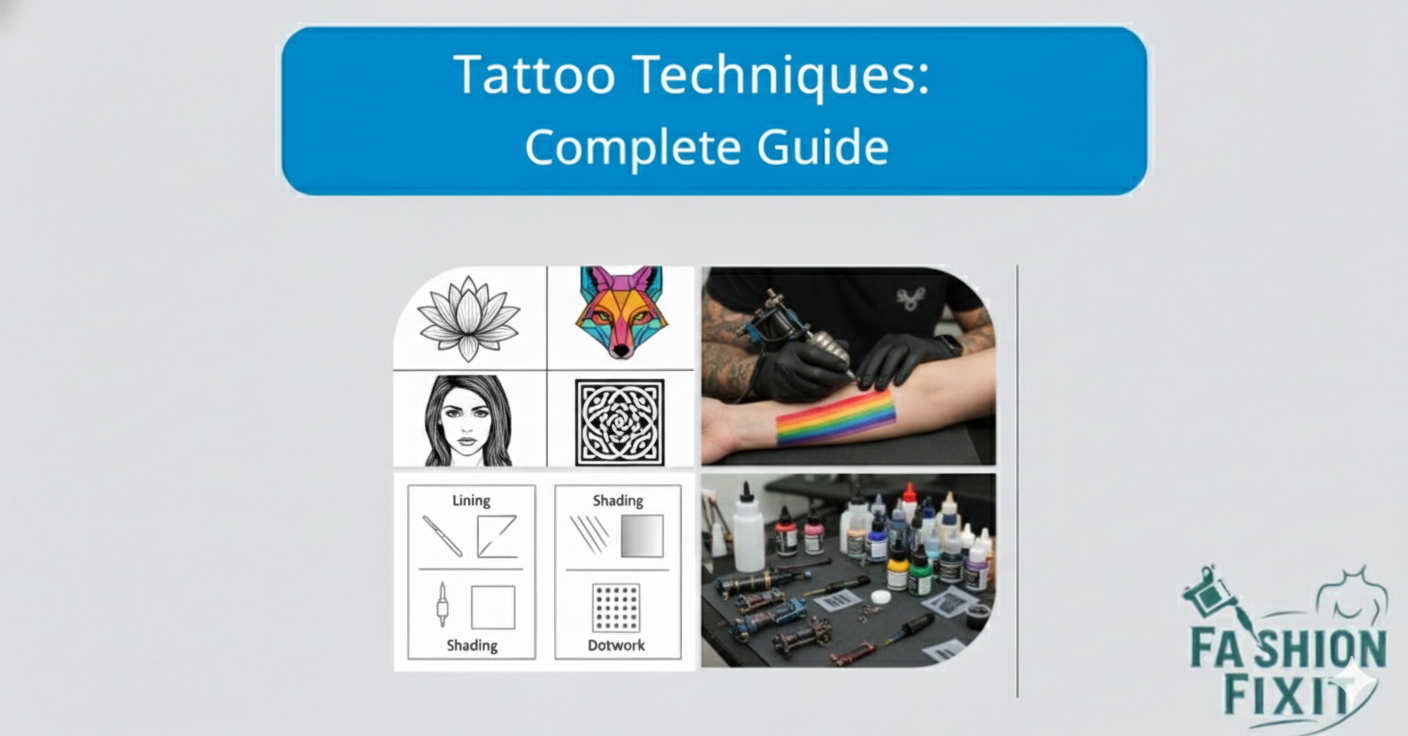
How Do Tattoo Artists Control Line Quality, Shading, and Color Saturation?
Tattoo artists control line quality, shading, and color saturation through needle configuration, machine speed, hand movement, and pigment delivery that determine pigment depth, density, and dermal distribution. These technical variables shape structural precision and long-term pigment stability.
Line Quality Control
Line quality depends on stable needle grouping, consistent penetration depth, and controlled machine stroke. Round liner groupings create concentrated pigment channels. Depth between 1.0–2.0 millimetres maintains dermal placement. Consistent hand tension stabilises stroke paths. Uniform penetration aligns pigment with dermal collagen bundles, producing sharp structural edges.
Shading Regulation
Shading depends on diluted pigment density, wider needle configurations, and controlled oscillation speed. Magnum and curved magnum groupings distribute pigment across broader dermal areas. Reduced pigment concentration softens gradients. Moderate machine speed reduces pigment compaction. Hand modulation increases tonal transitions and enhances dermal blend patterns.
Color Saturation Management
Color saturation depends on repeated passes, dense pigment packing, and slow machine movement across dermal tissue. Slower passes increase pigment volume per channel. Firm needle-to-skin connection ensures consistent delivery. Higher pigment concentration increases chromatic intensity. Dermal anchoring by fibroblasts maintains saturation during healing.
Technique Influence on Dermal Structure
Tattoo technique interacts with dermal architecture to define visual clarity. Precise depth protects collagen alignment. Controlled hand speed prevents dermal blowout. Balanced stretching stabilises needle entry. Predictable perforation patterns maintain uniform pigment distribution within dermal layers.
Interaction of Tools, Motion, and Pigment
Tattoo artists combine machine mechanics, needle design, and motion control to achieve defined lines, smooth gradients, and saturated colour fields. Machine voltage influences stroke strength. Needle diameter influences pigment flow. Motion speed influences penetration frequency. These combined factors create balanced dermal pigment structures.
Why Do Tattoos Sometimes Fade, Blur, Or Change Over Time?
Tattoos fade, blur, or change over time because epidermal turnover, ultraviolet degradation, pigment migration, immune cycling, pigment-chemistry behaviour, and dermal ageing alter pigment visibility and structural definition inside human skin. Tattoo ageing follows predictable biological mechanisms.
Epidermal Turnover And Perceived Fading
Epidermal turnover decreases tattoo saturation by increasing surface opacity above dermal pigment. Keratinocyte layers renew every 28 days. Additional surface cells scatter more light. Reduced transparency diminishes visible intensity even when dermal pigment concentration remains constant.
Ultraviolet Exposure And Pigment Degradation
Ultraviolet exposure accelerates tattoo fading by fragmenting pigment molecules and weakening dermal collagen. Photochemical reactions break pigment bonds. Collagen fibres degrade under ultraviolet stress. Lighter pigments degrade faster than carbon-based blacks because molecular stability differs across pigment categories.
Pigment Migration And Edge Blurring
Pigment migration blurs tattoo edges when pigment particles disperse through remodelled collagen networks. Dermal fibres loosen with age. Mechanical stretching enlarges micro-spaces. Pigment expands along weakened structural lines. Wider diffusion softens contours and reduces line precision.
Immune Cycling And Pigment Reduction
Immune cycling reduces tattoo density through continuous macrophage activity against pigment particles. Macrophages engulf pigment throughout life. Pigment relocates during macrophage turnover. Some pigment enters lymphatic pathways. Long-term redistribution produces uneven saturation patterns in older tattoos.
Pigment Chemistry And Colour Alteration
Pigment chemistry determines long-term colour stability and directional colour shift. Organic pigments shift toward brown as molecular chains degrade. Iron oxide pigments oxidise and darken or grey. Carbon pigments maintain higher structural stability. Titanium dioxide increases opacity yet causes muted brightness during epidermal thickening.
Dermal Ageing And Structural Change
Dermal ageing modifies tattoo appearance by reducing collagen density and altering skin elasticity. Collagen loss increases pigment dispersion. Elastin fragmentation creates irregular tension lines. Dermal thinning changes geometric proportions. These structural shifts alter clarity and design alignment.
How Do Different Skin Types and Skin Tones Affect Tattoo Results?
Different skin types and skin tones affect tattoo results because epidermal thickness, melanin concentration, collagen density, and inflammatory reactivity change pigment visibility, line clarity, and long-term saturation inside the dermis. Tattoo outcomes follow biological variation across human skin.
Influence Of Skin Type On Tattoo Outcomes
Different skin types change tattoo behaviour through oil production, barrier function, and sensitivity levels.
The skin-type influences are given below:
- Dry skin: increased flaking and slower healing that reduce early colour evenness
- Oily skin: higher sebum flow that dilutes surface pigment during healing
- Combination skin: inconsistent barrier behaviour that affects uniform saturation
- Sensitive skin: amplified inflammatory response that increases redness and swelling
These biological differences alter healing patterns and modify pigment retention consistency.
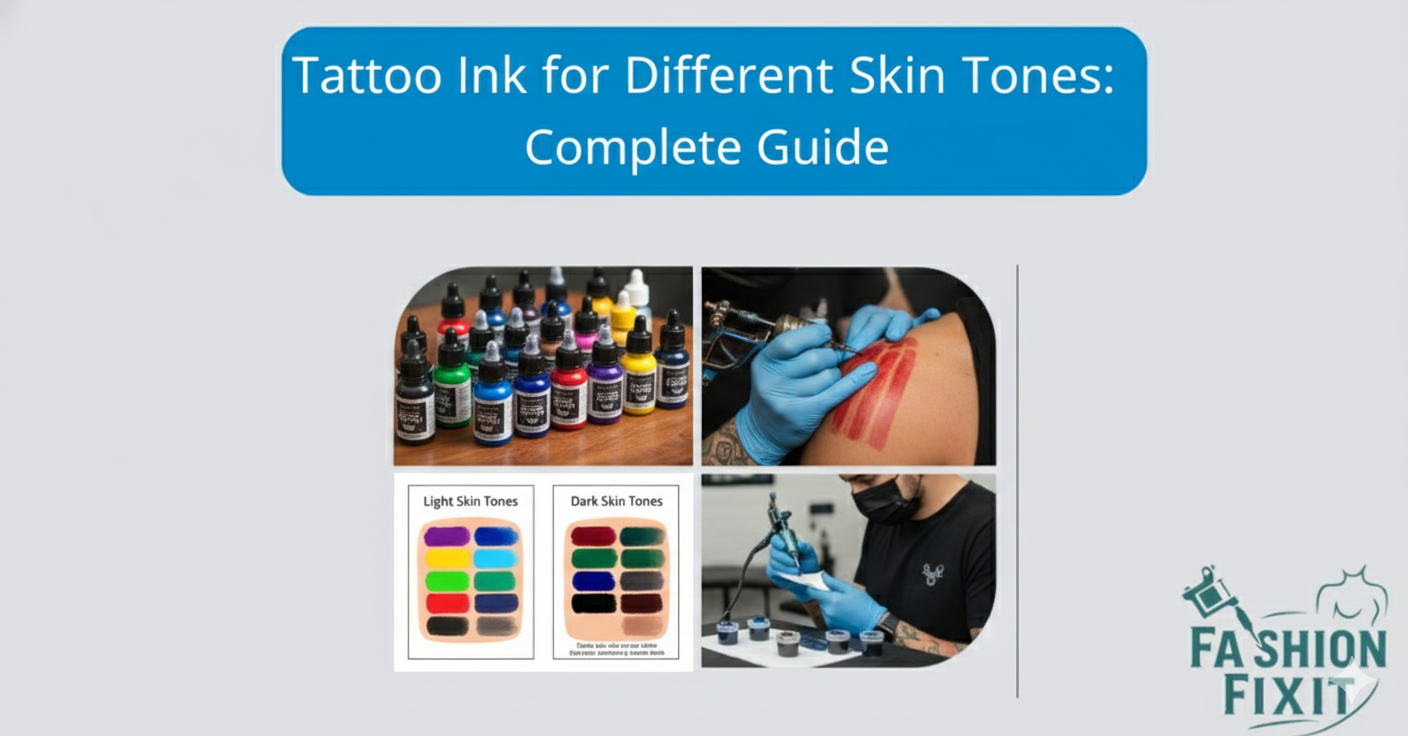
Influence Of Skin Tone On Pigment Visibility
Different skin tones modify tattoo visibility because melanin concentration changes light absorption above dermal pigment. Higher melanin levels absorb more wavelengths and reduce contrast. Lower melanin levels increase reflective brightness. Saturated colours behave differently across tone ranges because melanin alters optical expression.
Pigment Behaviour Across Skin Tones
Different pigments interact with melanin in distinct ways that influence final colour expression.
The pigment–tone interactions are given below:
- Black pigments: highest contrast across all tones
- Red pigments: stronger visibility on lighter tones, muted visibility on deeper tones
- Yellow pigments: lower contrast on medium and deep tones
- Blue-green pigments: variable vibrancy depending on melanin undertone
- White pigments: minimal visibility across deep tones due to melanin absorption
These interactions determine colour selection strategies for consistent outcomes.
Dermal Structure And Tattoo Clarity
Different skin types and tones affect line clarity because collagen density and fibre orientation influence pigment alignment within the dermis. Higher collagen density sharpens borders. Lower density increases micro-dispersion. Variability in dermal thickness changes needle penetration behaviour and pigment placement depth.
Inflammatory Reactivity And Healing Behaviour
Different skins heal at different rates because inflammatory sensitivity changes swelling, redness, and pigment distribution. Hyper-reactive skin expands fluid volume, softens early line edges, and increases early pigment lift. Low-reactive skin produces more stable wound environments that improve saturation.
Long-Term Stability Across Skin Variations
Different skin types and tones influence long-term tattoo stability because melanin behaviour, collagen turnover, and elasticity shifts change pigment visibility with age. Higher melanin reduces ultraviolet penetration, slowing pigment degradation. Lower melanin increases ultraviolet sensitivity and accelerates fading. Elasticity differences alter line geometry over decades.
How Do Different Tattoo Styles Affect How Tattoos Work on the Skin?
Different tattoo styles affect how tattoos work on the skin because line structure, pigment density, needle configuration, and dermal placement change pigment distribution, collagen interaction, and long-term visual stability. Tattoo style determines how mechanical insertion shapes dermal pigment behaviour.
Line-Dominant Styles And Dermal Precision
Line-dominant tattoo styles influence dermal precision through narrow pigment channels and concentrated penetration paths.
The line-dominant style effects are given below:
- Fine-line styles: shallow penetration and minimal pigment volume that reduce long-term saturation
- Single-line styles: narrow tracks that depend on collagen alignment for edge stability
- Geometric line styles: uniform depth requirements that maintain structural symmetry
These styles rely on precise dermal placement because lateral diffusion disrupts line clarity.
Saturation-Dominant Styles And Pigment Retention
Saturation-dominant tattoo styles influence dermal retention by increasing pigment load and expanding pigment interaction with collagen bundles.
The saturation-dominant style effects are given below:
- Traditional American styles: dense carbon pigments that stabilise within dermal collagen
- Neo-traditional styles: layered applications creating strong chromatic retention
- Blackwork styles: high-volume carbon deposits with strong macrophage sequestration
Dense pigment structures maintain stability because carbon-rich particles resist molecular degradation.
Gradient-Based Styles And Dermal Diffusion
Gradient-based tattoo styles influence dermal diffusion by distributing diluted pigment across broader dermal zones.
The gradient-based style effects are given below:
- Realism styles: soft gradients requiring consistent depth precision
- Portrait styles: micro-shading requiring balanced fibroblast anchoring
- Watercolour styles: dispersed pigment fields sensitive to ageing and ultraviolet exposure
Gradient dispersion increases reliance on collagen stability because light tones shift rapidly with dermal remodelling.
Needle Configuration And Pigment Pathways
Tattoo styles affect pigment pathways because needle groupings alter micro-injury patterns and pigment flow. Liner needles create concentrated channels. Magnum groupings distribute pigment broadly. Curved magnums soften gradient transitions. Dermal insertion patterns adjust pigment volume and collagen interaction.
Healing Behaviour Across Tattoo Styles
Tattoo healing differs by style because pigment density, penetration depth, and dermal disruption influence inflammatory response and epidermal regeneration. Dense styles create thicker scabs. Minimalist styles form thinner plasma films. Gradient styles produce extended flaking through surface-layer pigment distribution.
Long-Term Stability And Style-Specific Ageing
Tattoo ageing varies across styles because pigment density, line width, and shading patterns respond differently to epidermal turnover, collagen degradation, and immune cycling.
The style-ageing patterns are given below:
- Fine-line styles: higher fade rates due to limited pigment mass
- Traditional styles: slower ageing through carbon-dense deposits
- Realism styles: tonal flattening as subtle gradients lose contrast
- Blackwork styles: sustained visibility through high macrophage retention
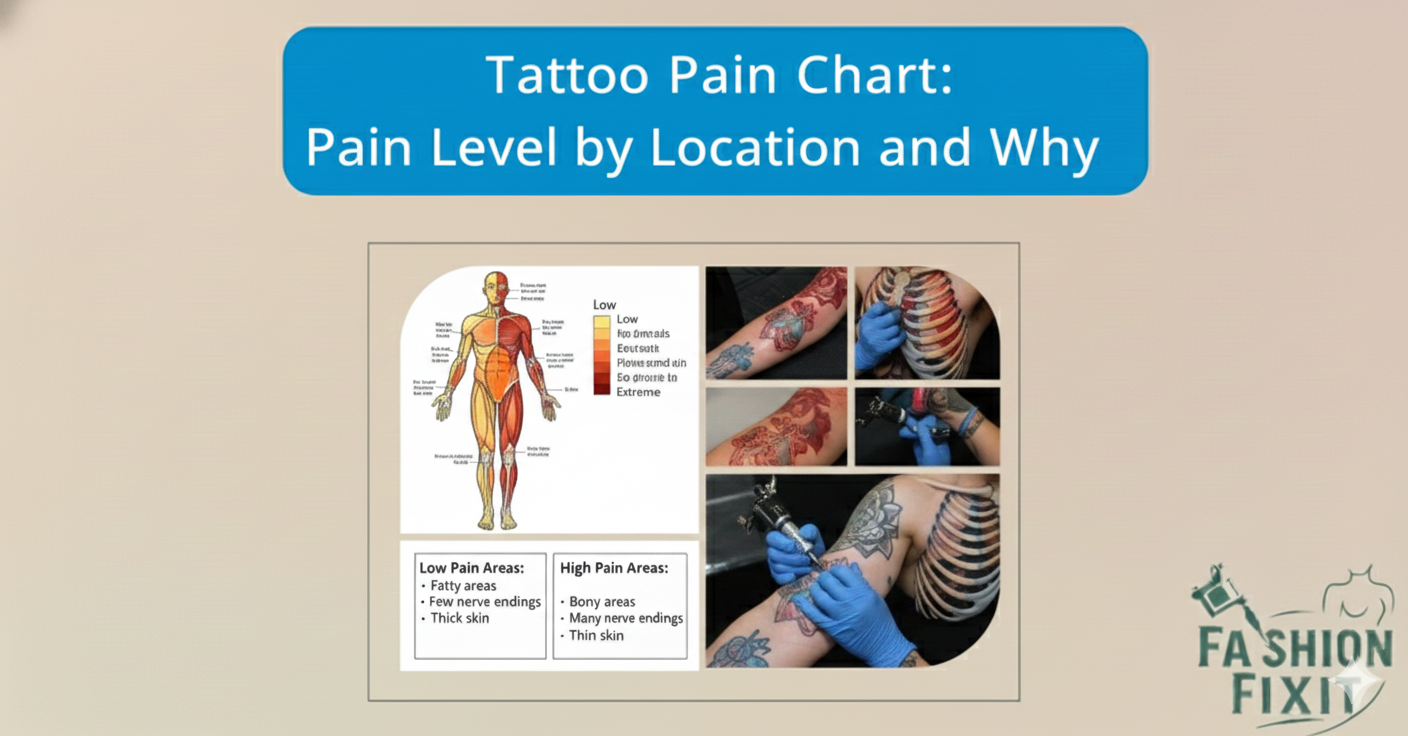
How Do Pain Levels Work Across Different Body Areas?
Pain levels work across different body areas because nerve density, dermal thickness, adipose volume, and bone proximity change nociceptor activation during tattooing. Anatomical structure determines mechanical force transmission, inflammatory sensitivity, and sensory intensity.
Anatomical Factors That Influence Tattoo Pain
Tattoo pain varies across anatomical regions because structural and neurological attributes change sensory response. Higher nerve density increases sharp sensations. Thinner dermal layers transmit force rapidly. Thicker adipose layers cushion needle penetration. Bone proximity amplifies vibration when soft-tissue buffering decreases. These factors combine to form region-specific pain profiles.
High-Pain Body Areas
High-pain body areas demonstrate elevated nociceptor activation because thin tissue, reduced cushioning, and dense sensory fibres intensify mechanical stimulation.
- Ribcage: thin skin with active intercostal nerves
- Spine: minimal soft tissue and strong vibratory transfer
- Ankles and shins: low adipose coverage and close bone structure
- Armpits: dense neural networks
- Groin: concentrated sensory fibres
These regions produce strong sensory signals during repeated needle penetration.
Moderate-Pain Body Areas
Moderate-pain body areas create balanced sensation because nerve presence and tissue cushioning distribute mechanical force predictably.
- Shoulders: thicker muscle layers
- Outer arms: stable dermal thickness
- Upper thighs: strong adipose padding
- Calves: lower nociceptor concentration
These regions maintain consistent sensation levels during tattoo application.
Low-Pain Body Areas
Low-pain body areas register mild discomfort because increased soft tissue and lower nerve density reduce nociceptor activation.
- Forearms: balanced dermal–adipose structure
- Outer biceps: substantial muscle mass
- Upper back: broad surface with reduced sensitivity
- Gluteal region: thick adipose coverage
These regions absorb mechanical force efficiently.
Body Composition And Pain Response
Pain levels differ across individuals because muscle mass, fat distribution, hydration, and collagen integrity change mechanical absorption. Hydrated dermis tolerates perforation more evenly. Firm collagen decreases tugging forces. Muscle and adipose layers reduce needle vibration, creating lower sensory intensity.
Session-To-Session Pain Variation
Pain levels fluctuate between sessions because immune activation, stress hormones, sleep quality, and fatigue shift sensory thresholds. Heightened inflammation increases reactivity. Reduced sleep increases nociceptor response. Cortisol fluctuations change discomfort perception during prolonged procedures.
How Do Touch-Ups Work and When Are They Necessary?
Touch-ups work by re-depositing pigment into areas where dermal pigment density decreases, and touch-ups become necessary when epidermal turnover, uneven healing, pigment loss, or design distortion reduces visual clarity. Touch-ups reinforce dermal pigment structures and restore uniform saturation.
How Touch-Ups Restore Pigment Density
Touch-ups restore pigment density through targeted needle application that re-creates stable dermal pigment placement. Artists reopen narrow micro-channels, insert fresh pigment into collagen bundles, and strengthen macrophage sequestration patterns. Controlled depth between 1.0–2.0 millimetres ensures uniform placement that matches the original tattoo.
Why Touch-Ups Become Necessary
Touch-ups become necessary when biological or procedural factors reduce pigment contrast or edge sharpness.
- Uneven epidermal healing decreases surface clarity
- Early scab removal lifts pigment from shallow regions
- Ultraviolet exposure degrades pigment molecules
- Immune cycling reduces pigment concentration in micro-areas
- Gradient styles lose tonal balance faster than dense styles
These factors lower saturation, distort lines, or flatten shading gradients.
When Touch-Ups Are Typically Required
Touch-ups are typically required after the initial healing period when dermal reconstruction reveals inconsistencies. Most tattoos reach stable clarity between month three and month six. Touch-up timing often falls within the first year because collagen alignment and fibroblast anchoring finalise during this window.
Touch-Ups and Tattoo Style Differences
Touch-up frequency changes across styles because pigment load, line width, and saturation strength influence long-term stability. Fine-line styles require more frequent reinforcement because narrow pigment channels fade faster. Traditional and blackwork styles require fewer interventions because carbon-dense deposits maintain structural visibility. Realism and watercolour styles require periodic balancing due to gradient sensitivity.
How Aftercare Influences Touch-Up Needs
Touch-up necessity decreases when aftercare stabilises epidermal healing and protects dermal pigment structures. Moisture balance prevents excessive scabbing. Sun protection slows ultraviolet degradation. Low-friction environments reduce pigment lift. Proper aftercare preserves macrophage–fibroblast retention patterns.
Long-Term Maintenance and Touch-Up Strategy
Touch-ups maintain long-term visual consistency by reinforcing pigment pathways shaped during original dermal placement. Over decades, dermal ageing, collagen thinning, and immune cycling increase pigment diffusion. Strategic reinforcement preserves clarity, edge definition, and chromatic accuracy.
How Do Tattoo Artists Maintain Hygiene and Safety During the Procedure?
Tattoo artists maintain hygiene and safety during the procedure by controlling microbial exposure, using sterilised equipment, following barrier protocols, and regulating environmental cleanliness to protect skin integrity during dermal penetration. Hygiene systems ensure safe pigment placement and stable wound conditions.
Sterilisation And Equipment Control
Tattoo hygiene begins with equipment sterilisation that prevents microbial transfer during needle penetration. Single-use needles eliminate cross-contamination risk. Autoclaved grips and stainless components remove residual biological material. Pre-packaged cartridges maintain sterility until activation. These controls ensure clean channels for dermal pigment delivery.
Barrier Protection During Application
Tattoo safety requires barrier systems that isolate biological fluids and prevent cross-exposure. Artists use medical gloves, disposable aprons, machine covers, clip-cord sleeves, and workstation barriers. Protective film shields surfaces from plasma and pigment. Layered barriers prevent direct contact between equipment and skin.
Skin Preparation Before Needle Contact
Tattoo safety depends on skin preparation that reduces microbial load and stabilises the epidermal surface. Antimicrobial cleansers remove transient flora. Alcohol-based antiseptics reduce bacterial density. Mechanical shaving prevents hair-related drag. Prepared skin increases pigment control and reduces post-procedure infection risk.
Environmental Cleanliness And Surface Regulation
Tattoo hygiene relies on controlled environments that limit environmental contamination. Artists disinfect chairs, armrests, trays, and machines between clients. Medical-grade cleaners remove microbial films. Organised workstation layouts prevent cross-contact between sterile and used tools. Environmental stability supports consistent procedural control.
Ink Handling And Cross-Contamination Prevention
Tattoo safety requires controlled pigment handling to maintain sterile boundaries. Ink caps are single-use. Bottles never contact workstation surfaces. Artists discard unused pigment after each session. These practices ensure pigment purity during dermal deposition.
Waste Disposal And Biological Control
Tattoo hygiene requires regulated disposal systems that isolate biological waste. Sharps containers secure needles. Biohazard bags contain contaminated gloves and wipes. Segregated disposal prevents hazard exposure outside the procedural area.
Artist Health Protocols And Client Safety
Tattoo safety depends on artist health protocols that reduce pathogen transmission. Artists avoid working with open wounds, respiratory illness, or compromised immunity. Handwashing before and after procedures reduces surface microbe presence. Immunisation compliance protects long-term client safety.
How Do Tattoo Artists Prepare Your Skin Before Tattooing?
Tattoo artists prepare your skin before tattooing by cleansing, shaving, disinfecting, and stabilising the epidermal surface to reduce microbial load and create uniform conditions for dermal pigment placement. Skin preparation establishes sterile boundaries and supports controlled needle penetration.
Cleansing To Remove Surface Impurities
Tattoo preparation begins with cleansing that removes oils, debris, and transient microorganisms from the epidermal layer. Antimicrobial soaps reduce surface flora. Non-residue cleansers improve stencil adhesion. Clean epidermal surfaces reduce friction and decrease early inflammatory stress during needle entry.
Shaving To Eliminate Hair Interference
Tattoo artists shave the area to remove hair that disrupts pigment flow and increases mechanical drag. Disposable razors prevent cross-contamination. Shaving creates smooth contact zones for stencil transfer. Uniform skin texture improves needle glide and stabilises pigment deposition pathways.
Disinfection To Reduce Microbial Density
Tattoo preparation requires disinfection that lowers bacterial presence before dermal penetration. Alcohol-based antiseptics decrease microbial load. Chlorhexidine solutions increase residual antimicrobial activity. Disinfected surfaces minimise infection risk and create clean channels for pigment entry.
Stencil Placement For Structural Accuracy
Tattoo artists apply stencils to guide line structure and maintain proportional accuracy during needle application. Stencil transfer fluids adhere to prepared skin and preserve design geometry. Proper placement ensures depth-consistent pathways that shape dermal pigment alignment.
Skin Tensioning To Improve Needle Control
Tattoo skin preparation includes tensioning that stabilises the epidermis and supports predictable penetration. Horizontal stretching reduces dermal movement. Firm tension reduces needle bounce. Controlled tension improves pigment packing and sharpens structural edges.
Assessment Of Skin Condition Before Application
Tattoo artists assess skin condition to adjust technique for hydration levels, elasticity, and sensitivity. Hydrated skin improves pigment uptake. Low-elasticity skin requires reduced stroke strength. Sensitive skin needs controlled passes to stabilise inflammatory response. Condition assessment improves dermal outcome consistency.
How Safe Are Tattoos and What Regulations Govern Tattooing in the United States?
Tattoos are safe when performed under regulated conditions because sterilisation standards, licensure requirements, infection-control protocols, and pigment-safety regulations govern tattooing in the United States. Tattoo safety depends on procedural hygiene, state-level oversight, and controlled dermal practices.
Tattoo Safety Under Regulated Conditions
Tattoo safety relies on sterile equipment, barrier protection, and controlled skin preparation that reduce microbial exposure during dermal penetration. Single-use needles prevent cross-contamination. Autoclaved components remove residual pathogens. Disinfected workstations maintain clean procedural environments. These systems stabilise wound conditions and minimise infection incidence.
Factors That Influence Tattoo Safety
Tattoo safety varies across individuals because immune status, skin condition, and healing behaviour determine inflammatory response and infection susceptibility. Compromised immunity increases microbial risk. Sensitive skin intensifies inflammatory signalling. Poor aftercare disrupts epidermal repair and lifts pigment from shallow dermal layers. Biological variation changes safety outcomes.
United States Regulations Governing Tattooing
Tattooing in the United States is governed by state and local regulations that establish licensure standards, facility requirements, equipment sterilisation rules, and age-restriction laws. States issue tattoo practitioner licences after mandated training. Counties conduct inspections of tattoo facilities. Age regulations prohibit tattooing minors without parental consent in most jurisdictions.
Sterilisation And Infection-Control Requirements
Tattoo regulations mandate sterilisation protocols that align with public-health guidelines. Autoclaves undergo routine biological testing. Single-use cartridges and disposable gloves remain required in licensed environments. Disinfectants meet medical-grade standards. These controls limit bloodborne pathogen transmission.
Pigment Safety Oversight And Federal Involvement
Tattoo pigment regulation in the United States falls under federal authority because color additives used in tattoo inks fall within Food and Drug Administration jurisdiction. FDA oversight focuses on pigment composition, contaminant control, and adverse-event monitoring. Manufacturing standards require consistent formulation and safe particle profiles.
Facility Standards And Operational Compliance
Tattoo regulations require facilities to maintain controlled procedural environments that protect epidermal and dermal integrity. Permit holders maintain hand-washing stations, sealed waste containers, and segregated clean zones. Workstations remain disinfected between clients. Compliance ensures repeatable safety outcomes.
Public-Health Monitoring And Enforcement
Tattoo safety is reinforced through public-health inspections, practitioner education, and enforcement actions that correct non-compliant practices. Inspectors monitor sterilisation logs, equipment storage, and sanitation routines. Violations prompt corrective measures or licence suspension. Oversight maintains uniform safety standards across licensed establishments.
How Should Someone Prepare for a Tattoo Session to Support Better Healing?
Someone prepares for a tattoo session to support better healing by stabilising hydration, strengthening epidermal condition, regulating immune readiness, and minimising circulatory disruption to improve pigment retention during early healing. Preparation creates optimal biological conditions for controlled dermal repair.
Hydration And Skin Conditioning Before Tattooing
Tattoo preparation begins with hydration and skin conditioning because hydrated dermis and supple epidermis improve needle penetration and pigment uptake. Adequate water intake increases dermal elasticity. Moisturised epidermal layers reduce micro-tearing. Flexible collagen networks support consistent pigment distribution across needle channels.
Nutrition And Immune Readiness
Tattoo preparation includes nutritional stability because balanced nutrients regulate inflammatory response and strengthen collagen formation. Stable glucose levels prevent fatigue during long sessions. Vitamin-rich foods support tissue repair. Controlled inflammation protects early pigment positioning within the dermis.
Sleep, Stress Regulation, And Sensory Thresholds
Tattoo preparation requires sufficient sleep and stress reduction because hormonal balance modifies nociceptor sensitivity and inflammatory intensity. Rested individuals maintain higher pain thresholds. Regulated cortisol reduces reactive swelling. Stable autonomic patterns minimise involuntary muscle tension during pigment placement.
Skin Surface Preparation Before Appointment
Tattoo preparation includes epidermal protection because intact skin increases procedural precision and reduces pigment disturbance. Avoiding sunburn preserves epidermal thickness. Avoiding exfoliants prevents irritation. Avoiding heavy lotions improves stencil adherence. Stable surfaces create uniform channels for dermal pigment delivery.
Substance Management And Circulatory Stability
Tattoo preparation requires avoidance of substances that alter circulation or inflammatory behaviour. Alcohol increases bleeding and reduces pigment retention. Blood-thinning agents increase plasma flow and disrupt early sealing. Stimulants increase heart rate and heighten sensitivity. Circulatory stability supports cleaner pigment deposition.
Clothing Choice And Procedural Positioning
Tattoo preparation includes clothing planning because friction, compression, and restricted movement interfere with epidermal recovery. Loose garments reduce abrasion. Accessible areas improve artist movement. Stable positioning reduces dermal stretching and maintains consistent needle depth.
Environmental And Mental Readiness
Tattoo preparation requires mental readiness because calm physiological states support predictable healing patterns. Early arrival reduces stress responses. Controlled breathing stabilises tissue tension. Prepared mental focus reduces sympathetic activation that influences blood flow and swelling.
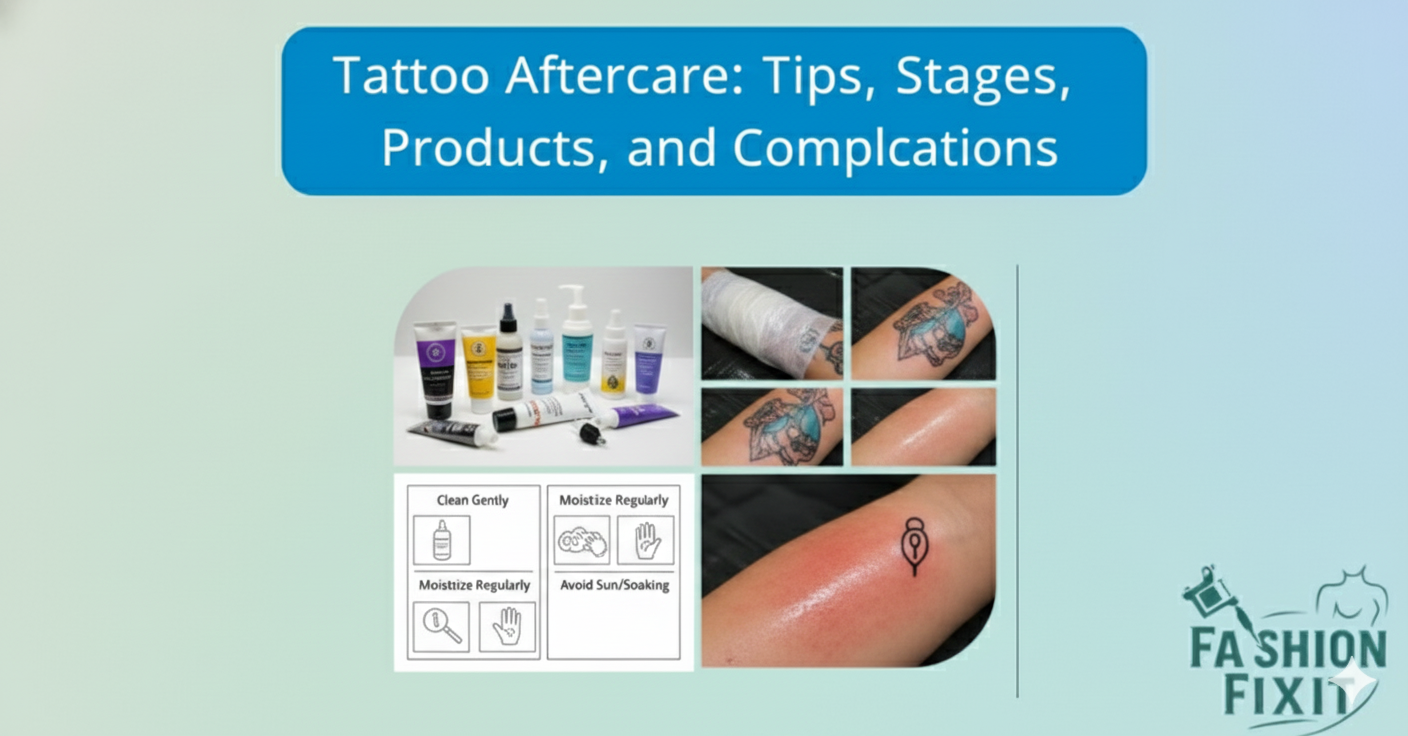
How Do Aftercare Products and Methods Support Tattoo Longevity?
Aftercare products and methods support tattoo longevity by stabilising epidermal repair, protecting dermal pigment structures, regulating inflammation, and preventing pigment loss during early healing. Aftercare maintains controlled biological conditions that preserve long-term pigment clarity and structural definition.
Moisture Regulation And Epidermal Stability
Aftercare supports tattoo longevity by regulating moisture levels that maintain epidermal flexibility and reduce pigment disruption. Balanced hydration prevents excessive scabbing. Controlled moisture reduces keratinocyte tearing. Stable epidermal renewal protects pigment positioned within early dermal channels. Moisturising ingredients such as panthenol and glycerin maintain barrier function without pore occlusion.
Antimicrobial Protection And Infection Prevention
Aftercare supports tattoo longevity by reducing microbial activity that interferes with wound healing and pigment retention. Antimicrobial cleansers decrease surface bacterial load. Mild antiseptics prevent local infection. Clean wound environments reduce inflammatory escalation that disrupts fibroblast anchoring and macrophage sequestration patterns essential for pigment stability.
Barrier Formation And Mechanical Protection
Aftercare supports tattoo longevity by forming protective barriers that minimise friction, compression, and environmental exposure. Protective ointments create thin occlusive layers that reduce abrasion. Breathable films shield the epidermis from contaminants. Reduced mechanical stress prevents early pigment lift and maintains uniform pigment density.
Inflammation Control And Pigment Preservation
Aftercare supports tattoo longevity by controlling inflammation that shapes dermal pigment behaviour. Overactive inflammation increases fluid accumulation and disrupts emerging collagen structures. Controlled inflammatory response strengthens collagen–pigment alignment. Stable fibroblast activity improves early pigment anchoring within dermal bundles.
Ultraviolet Protection And Molecular Stability
Aftercare supports tattoo longevity by shielding pigment molecules from ultraviolet degradation. Sun exposure accelerates pigment fragmentation and collagen breakdown. Broad-spectrum sunscreen reduces ultraviolet penetration. Reduced photochemical stress preserves saturation, maintains tonal accuracy, and protects carbon-based and organic pigment structures.
Long-Term Skin Maintenance And Dermal Integrity
Aftercare supports tattoo longevity through long-term skin maintenance that preserves dermal collagen and epidermal transparency. Hydrated dermis improves light reflection across pigment fields. Consistent moisturisation reduces epidermal thickening. Collagen-supporting skincare slows dispersion associated with ageing. Stable dermal architecture improves tattoo clarity across decades.
How Do Tattoos Age Over Decades and What Predicts Long-Term Appearance?
Tattoos age over decades through epidermal turnover, ultraviolet degradation, pigment redistribution, collagen remodelling, and immune cycling that gradually change pigment contrast, line sharpness, and tonal accuracy. Long-term appearance depends on pigment chemistry, dermal structure, environmental exposure, and style-specific pigment density.
Epidermal Turnover And Surface Clarity
Tattoos age through continuous epidermal turnover because keratinocyte renewal increases surface opacity above dermal pigment. Renewal cycles occur roughly every 28 days. Increased keratin scattering reduces visible saturation. Age-related epidermal thickening further decreases colour brightness across large pigment fields.
Ultraviolet Degradation And Molecular Breakdown
Tattoos age through ultraviolet degradation because ultraviolet energy fragments pigment molecules and weakens collagen fibres. Organic pigments break down faster due to lower molecular stability. Carbon-based pigments retain structural strength longer. Collagen photodegradation softens line edges and accelerates tonal flattening.
Dermal Pigment Migration And Diffusion
Tattoos age through pigment diffusion because dermal collagen loses density with time, increasing space for pigment movement. Reduced structural tightness increases micro-dispersion. Mechanical stretching expands pigment fields. Edge clarity softens as dermal fibre networks reorganise with age.
Immune Cycling And Gradual Pigment Reduction
Tattoos age through immune cycling because macrophages repeatedly engulf pigment particles over a lifetime. Some pigment relocates to new macrophages. Some pigment enters lymphatic pathways. Gradual redistribution changes saturation, especially in low-density styles and subtle colour gradients.
Pigment Chemistry And Long-Term Stability
Tattoos age according to pigment chemistry because molecular composition predicts degradation rate and chromatic shift.
- Carbon blacks retain highest stability
- Iron oxides oxidise and gray toward cooler tones
- Organic reds and yellows darken or desaturate
- Titanium dioxide maintains opacity but reduces vibrancy during epidermal thickening
Pigment formulation determines chromatic direction over decades.
Skin Structure, Ageing, And Tattoo Geometry
Tattoos age through dermal structural change because collagen loss, elastin fragmentation, and volume reduction distort geometric design elements. Reduced elasticity alters symmetry. Fine-line work diffuses fastest due to low pigment mass. Dense traditional styles resist visual distortion through heavy pigment load.
Environmental Exposure And Lifestyle Predictors
Tattoos age according to environmental exposure because ultraviolet radiation, friction, heat, and chemical contact accelerate pigment and collagen degradation. High sun exposure increases fading. Occupational abrasion softens edges. Dehydrated dermis increases surface opacity and tonal dullness.
Tattoo Style And Predictive Ageing Patterns
Tattoos age differently by style because pigment density, line width, and shading gradients respond uniquely to biological forces.
- Fine-line styles fade rapidly through minimal pigment volume
- Realism styles lose depth as subtle gradients flatten
- Traditional styles age slowly due to high carbon density
- Blackwork styles retain structural visibility across decades
Style selection predicts long-term clarity.
Artist Technique And Initial Placement Predictors
Tattoos age according to initial technique because depth consistency, needle grouping, and pigment saturation determine early structural stability. Proper dermal placement slows diffusion. Uniform saturation reduces patchiness. Balanced line tension maintains architectural precision.
How Do You Choose the Right Tattoo Artist and Studio?
You can choose the right tattoo artist and studio by evaluating technical skill, hygiene systems, regulatory compliance, stylistic compatibility, and consultation quality because these factors determine procedural safety and long-term tattoo stability. Selection accuracy shapes pigment placement, healing behaviour, and structural clarity.
Portfolio Quality And Style Matching
Tattoo artist selection begins with portfolio evaluation because line precision, shading control, and colour saturation demonstrate technical consistency. Artists specialise in style categories. Fine-line designs require micro-stroke accuracy. Realism requires gradient precision. Traditional styles require dense pigment packing. Style matching increases structural reliability during dermal placement.
Hygiene Standards And Safety Protocols
Tattoo studio selection depends on hygiene standards because sterilised tools, barrier systems, and controlled surfaces prevent microbial transfer during dermal penetration. Single-use needles eliminate cross-contact risk. Autoclaved components remove residual contaminants. Disinfected stations stabilise wound environments and support uniform healing.
Regulatory Compliance And Licensure Verification
Tattoo selection requires licensure verification because United States regulations mandate practitioner training, bloodborne-pathogen certification, and facility inspection. Licensed practitioners follow sterilisation rules, waste-management protocols, and workstation zoning. Compliance confirms procedural discipline and protects dermal integrity.
Skin Assessment And Technical Consultation
Tattoo artist selection includes skin assessment because dermal thickness, elasticity, melanin level, and sensitivity determine pigment behaviour. Skilled practitioners adjust depth strategies, needle groupings, and saturation levels according to skin characteristics. Accurate consultation improves pigment retention and reduces healing variability.
Communication Quality And Design Planning
Tattoo artist selection relies on communication clarity because design geometry, placement, and proportional adjustments require collaborative planning. Precise communication ensures accurate stencil transfer, depth consistency, and style alignment. Clear planning predicts long-term visual stability across dermal layers.
Studio Environment And Professional Structure
Tattoo studio selection involves evaluating organisational structure because procedural layout, surface control, and workflow discipline influence safety outcomes. Segregated clean zones limit contamination. Visible sterilisation logs confirm equipment control. Organised environments reflect professional competency.
Client Outcomes And Healed-Result Consistency
Tattoo selection benefits from reviewing healed results because healed tattoos reveal pigment retention, line behaviour, and structural stability. Consistent healed outcomes reflect controlled technique. Variability indicates inconsistent depth control or pigment handling. Healed-result evaluation predicts long-term reliability.
Investment Quality And Procedure Value
Tattoo selection prioritises technical quality over low cost because dermal precision, pigment density, and structural longevity depend on experienced execution. Higher investment reflects expertise, controlled technique, and predictable outcomes. Quality-driven decisions increase tattoo stability across decades.
Conclusion
Tattoos remain stable, clear, and long-lasting when dermal pigment placement, immune retention, collagen structure, healing behaviour, and aftercare practices function together in a controlled biological process. Tattoo needles deliver pigment into the dermis. Macrophages and fibroblasts secure pigment through continuous sequestration. Healing stages set pigment depth and stability. Skin type, pigment chemistry, tattoo style, and body-area anatomy modify clarity, saturation, and ageing patterns. Long-term appearance depends on ultraviolet protection, collagen integrity, and consistent aftercare. Artist selection, studio hygiene, regulatory compliance, and technical precision ensure safe procedures and predictable outcomes.