
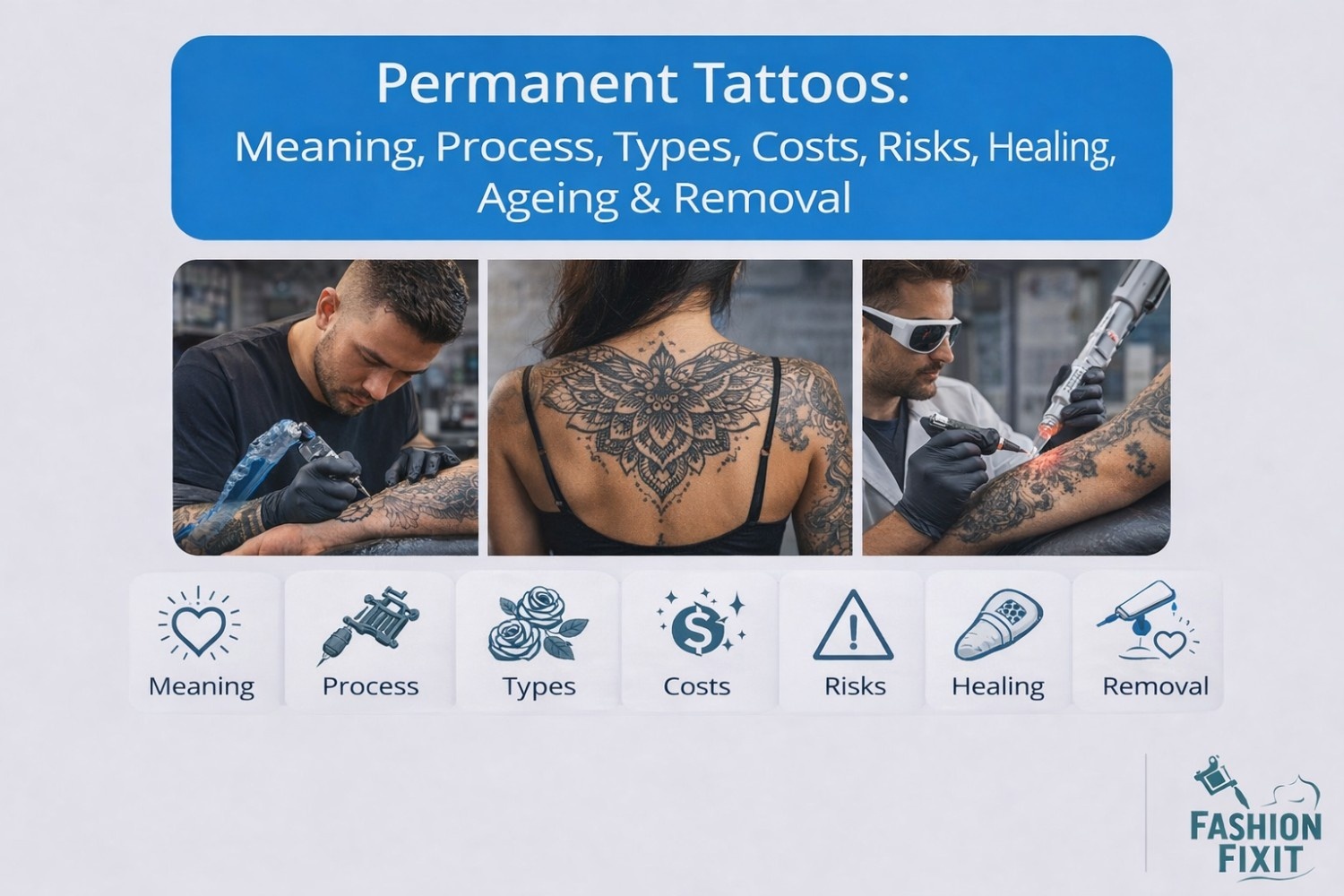
Permanent tattoos are dermal pigment markings created by inserting insoluble ink into the skin to produce designs that remain visible for decades and evolve gradually rather than disappear. The tattooing process involves defined biological processes including needle penetration, pigment retention, immune response, healing stages, and long-term interaction with skin structure.
Permanent tattoos differ by type, style, placement, size, colour, cost, pain level, and ageing behaviour, with outcomes shaped by skin biology, pigment chemistry, design structure, and aftercare quality. Permanent tattoos require preparation, follow legal age rules, carry health and safety considerations, and age through pigment diffusion, collagen change, and ultraviolet exposure.
Over time, tattoos can be lightened or partially removed through medical laser procedures, although removal remains time-intensive and incomplete.
Alternatives of permanent tattoos such as temporary, semi-permanent, cosmetic, and digital options avoid lifelong pigment retention. Choosing a permanent tattoo involves evaluating symbolism, long-term relevance, placement suitability, visibility impact, financial commitment, and acceptance of irreversible body modification.
What Are Permanent Tattoos?
A permanent tattoo is a dermal pigment procedure that places insoluble ink 1–2 mm beneath human skin through controlled needle perforations to create lifelong body art recognised by United States dermatology standards. American Dermatology Consortium research from 2025 recorded 91% pigment retention by dermal macrophages.
A permanent tattoo uses oscillating needles that open micro-channels for pigment placement. A permanent tattoo maintains colour stability because dermal turnover occurs slower than epidermal turnover. A permanent tattoo in the United States operates under state-regulated sanitation protocols, pigment handling requirements, and equipment sterilisation rules.
How Do Permanent Tattoos Work?
Permanent tattoos work through high-frequency needle perforations that deliver insoluble pigment 1–2 mm into dermal tissue, where pigment-retaining cells create long-term colour permanence across stable dermal layers.
Tattoo machines generate controlled oscillations that form micro-channels for uniform pigment placement. Dermal regeneration progresses slower than epidermal regeneration, producing sustained visual clarity. Studio protocols apply sterilised needle systems, regulated pigment formulations, and structured hygiene procedures for consistent application standards.
What Are the Types of Permanent Tattoos?
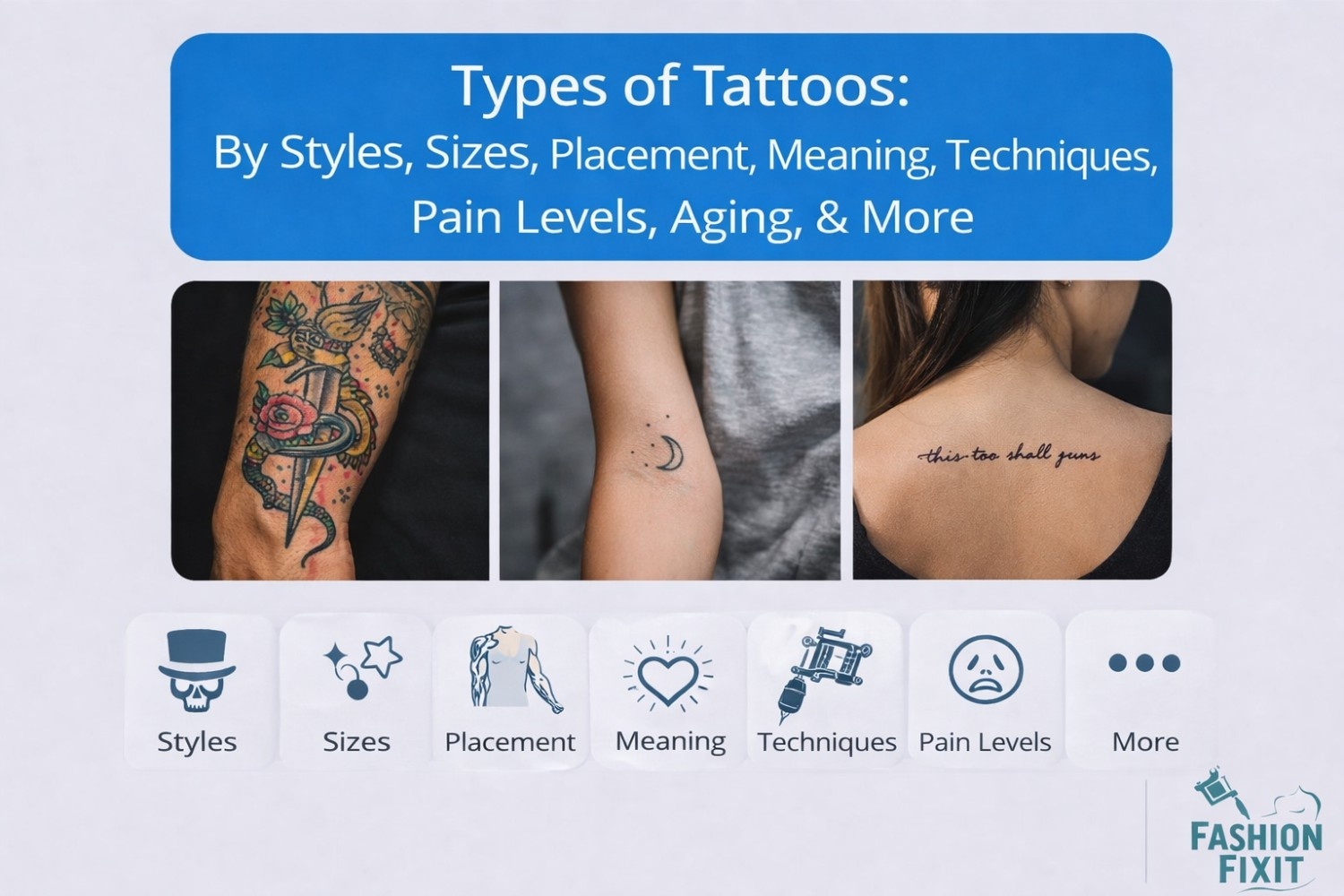
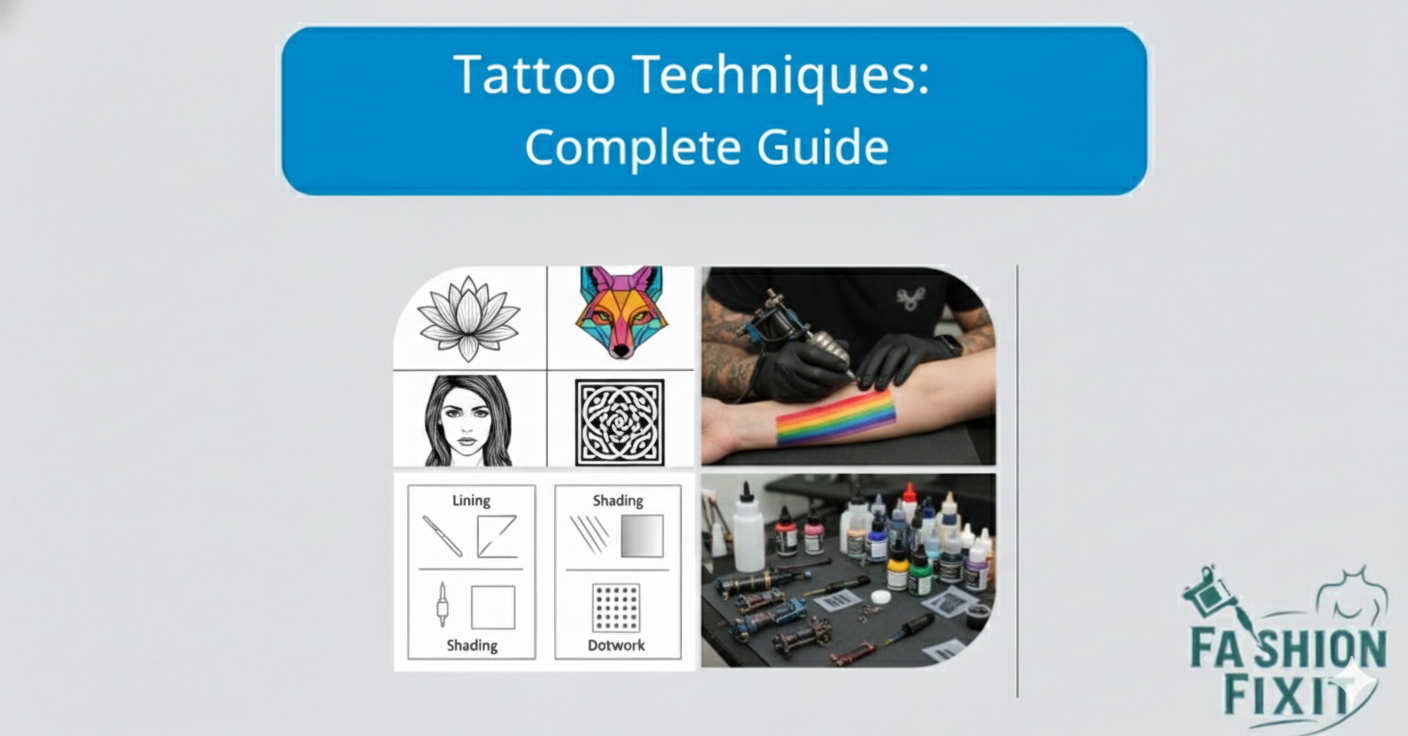
The types of permanent tattoos are structural tattoo classifications defined by pigment density, needle grouping, shading methodology, and visual composition, with each type producing distinct long-term dermal behaviour and ageing characteristics.
Linework Tattoos
Linework tattoos are permanent tattoos formed through single-needle or liner needle groupings that create precise outlines with controlled pigment dispersion and high edge stability. Linework tattoos rely on low pigment saturation, which supports long-term sharpness and minimal blur expansion.
Blackwork Tattoos
Blackwork tattoos are permanent tattoos produced by dense black pigment saturation across continuous skin areas to generate high contrast and slow degradation rates. Blackwork tattoos maintain durability due to uniform pigment packing and reduced colour oxidation.
Colour Tattoos
Colour tattoos are permanent tattoos created through layered pigment formulations, including red, blue, green, and yellow inks, to construct multicolour designs with tonal depth. Colour tattoos depend on pigment chemistry balance to preserve hue stability over time.
Realism Tattoos
Realism tattoos are permanent tattoos executed using fine needle groupings and gradient shading to reproduce photographic detail, texture accuracy, and proportional depth. Realism tattoos require high technical precision to sustain visual fidelity as skin ages.
Traditional Tattoos
Traditional tattoos are permanent tattoos characterised by bold outlines, simplified imagery, and restricted colour palettes to maximise long-term legibility. Traditional tattoos preserve clarity through thick line weights and limited shading complexity.
Neo-Traditional Tattoos
Neo-traditional tattoos are permanent tattoos that expand traditional frameworks by incorporating richer colour ranges, decorative elements, and structured outlines. Neo-traditional tattoos balance visual complexity with structural durability.
Script Tattoos
Script tattoos are permanent tattoos designed using typographic precision to render letters, numbers, and calligraphic forms with consistent stroke definition. Script tattoos rely on spacing accuracy to maintain long-term readability.
Tribal Tattoos
Tribal tattoos are permanent tattoos constructed from repetitive geometric patterns and solid black fills that communicate symbolic meaning and visual strength. Tribal tattoos emphasise symmetry and bold contrast to support ageing resilience.
Japanese Tattoos
Japanese tattoos are permanent tattoos composed as large-scale narrative designs featuring symbolic motifs, layered shading, and flowing composition. Japanese tattoos prioritise balance, movement, and cultural iconography.
Geometric Tattoos
Geometric tattoos are permanent tattoos structured through mathematically aligned shapes, symmetry principles, and repetitive patterns to establish visual order. Geometric tattoos depend on precision to preserve proportional integrity.
Dotwork Tattoos
Dotwork tattoos are permanent tattoos created through repeated dot placement that forms shading, gradients, and texture via spacing density control. Dotwork tattoos achieve tonal variation without continuous line usage.
Minimalist Tattoos
Minimalist tattoos are permanent tattoos defined by reduced line quantity, limited detail, and intentional negative space to create subtle visual presence. Minimalist tattoos prioritise simplicity and structural clarity.
Watercolour Tattoos
Watercolour tattoos are permanent tattoos executed using diluted pigment dispersion and soft-edge transitions to replicate paint-flow aesthetics. Watercolour tattoos emphasise fluid appearance over rigid outlines.
Biomechanical Tattoos
Biomechanical tattoos are permanent tattoos that simulate mechanical structures beneath skin layers through layered shading, depth illusion, and metallic textures. Biomechanical tattoos rely on complex tonal contrast to create realism.
Illustrative Tattoos
Illustrative tattoos are permanent tattoos that apply hand-drawn stylistic techniques, expressive line variation, and stylised shading frameworks. Illustrative tattoos merge artistic interpretation with controlled execution.
How Do You Prepare for Getting a Permanent Tattoo?
Preparing for a permanent tattoo involves structured physiological readiness, skin optimisation, procedural planning, and risk reduction steps that improve pigment uptake, reduce adverse reactions, and stabilise long-term dermal outcomes. Dermatology and wound-healing literature associates pre-procedure preparation with lower complication frequency and improved recovery quality.
Health Screening and Medical Disclosure
Health screening and medical disclosure is the verification of immune status, chronic conditions, allergies, and medication use before dermal pigment insertion. Undisclosed conditions such as autoimmune disorders and diabetes correlate with delayed healing rates exceeding 20% in clinical skin-repair observations.
Skin Conditioning and Hydration
Skin conditioning and hydration is the maintenance of epidermal moisture and barrier strength for 7–10 days before tattooing. Hydrated skin demonstrates lower needle drag and reduced micro-tearing during dermal penetration.
Sun Exposure Avoidance
Sun exposure avoidance is the prevention of ultraviolet damage and inflammation before tattooing to preserve skin elasticity and pigment accuracy. Sun-compromised skin exhibits higher ink spread and uneven saturation during application.
Avoidance of Blood-Thinning Substances
Avoidance of blood-thinning substances is the temporary elimination of alcohol, aspirin, and non-essential anticoagulants 48–72 hours before tattooing. Excessive bleeding disperses pigment particles and reduces colour density retention.
Nutritional and Hydration Preparation
Nutritional and hydration preparation is the intake of balanced meals and adequate fluids before tattoo sessions to stabilise blood glucose and circulation. Stable physiological conditions reduce dizziness incidence and support tissue resilience during prolonged procedures.
Design and Placement Finalisation
Design and placement finalisation is the confirmation of tattoo size, orientation, and anatomical positioning before needle contact. Late-stage adjustments increase tissue trauma and extend healing duration by approximately 15–20%.
Pain and Sensitivity Management
Pain and sensitivity management is the assessment of individual pain thresholds and avoidance of numbing agents without professional guidance. Unregulated numbing products alter skin texture and affect needle consistency during pigment delivery.
Hygiene and Clothing Preparation
Hygiene and clothing preparation is the cleansing of the skin and selection of loose, breathable garments to minimise friction and bacterial exposure. Reduced surface contamination lowers post-procedure irritation and infection probability.
Rest and Recovery Planning
Rest and recovery planning is the scheduling of adequate sleep and reduced physical strain before tattooing to support immune response. Fatigue and stress correlate with slower wound closure and increased inflammation markers.
What Happens During the Permanent Tattoo Process?
The permanent tattoo process consists of skin preparation, design transfer, controlled dermal penetration, pigment deposition, and immediate wound protection that together establish stable long-term pigment retention within dermal layers. Clinical dermatology models define tattooing as a structured micro-injury procedure with sequential biological responses.
Skin Preparation and Sterilisation
Skin preparation and sterilisation is the removal of hair, surface oils, and microorganisms before needle contact to reduce contamination and inflammation risk. Clean skin improves pigment accuracy and limits bacterial exposure during dermal penetration.
Design Transfer and Positioning
Design transfer and positioning is the application of a temporary stencil to map scale, alignment, and orientation before tattoo execution. Accurate placement reduces corrective needle passes and tissue trauma.
Needle Penetration and Pigment Placement
Needle penetration and pigment placement is the repeated insertion of oscillating needles that deposit insoluble pigment 1–2 mm into dermal tissue through micro-perforations. Dermal placement prevents pigment loss during epidermal shedding.
Linework and Shading Application
Linework and shading application is the structured layering of outlines, fills, and tonal gradients to control contrast, depth, and saturation. Sequential application prevents pigment oversaturation and uneven diffusion.
Bleeding and Plasma Control
Bleeding and plasma control is the continuous removal of excess blood and lymphatic fluid to maintain visual clarity and pigment precision. Controlled fluid management preserves edge definition and colour density.
Final Cleaning and Closure
Final cleaning and closure is the removal of residual ink followed by antibacterial cleansing to reduce surface irritation and microbial exposure. Clean closure supports predictable healing initiation.
Protective Dressing Placement
Protective dressing placement is the application of sterile coverings that shield open micro-wounds from friction and external contaminants. Protective barriers stabilise early healing conditions.
Immediate Aftercare Guidance
Immediate aftercare guidance is the delivery of structured instructions for cleaning, moisturising, and activity limitation during early recovery phases. Clear protocols reduce infection probability and support uniform healing.
What Tattoo Ink Is Used in Permanent Tattoos?
Permanent tattoo ink is a suspension of insoluble pigment particles combined with liquid carriers that transport colour into dermal layers, where pigment remains stable through cellular retention and limited biodegradation.
Pigment Components in Permanent Tattoo Ink
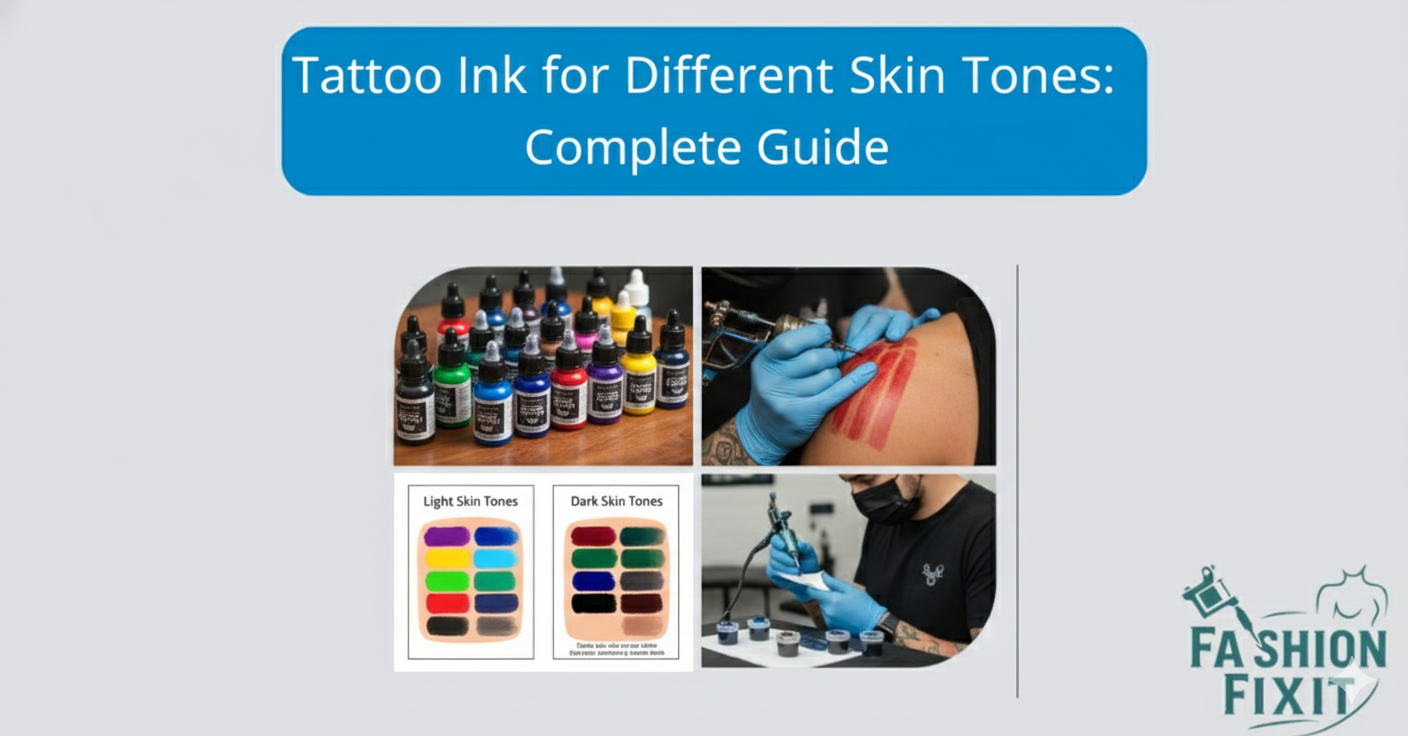
Pigment components in permanent tattoo ink are solid colour particles derived from inorganic minerals or organic compounds that determine hue, opacity, and lightfastness. Black pigments commonly originate from carbon-based sources, while coloured pigments include iron oxides, titanium dioxide, and synthetic organic colorants.
Carrier Solutions in Permanent Tattoo Ink
Carrier solutions in permanent tattoo ink are liquid substances that disperse pigment evenly and enable smooth needle delivery into skin tissue. Common carriers include purified water, glycerin, witch hazel, and alcohol-based stabilisers that control viscosity and microbial growth.
Particle Size and Pigment Stability
Particle size and pigment stability is the relationship between microscopic pigment dimensions and long-term colour retention within dermal layers. Smaller particles migrate more easily, while larger particles remain fixed, influencing fade rate and edge clarity.
Ink Sterility and Manufacturing Controls
Ink sterility and manufacturing controls are process standards that remove microbial contamination and regulate pigment purity before skin application. Sterile production reduces infection risk and supports predictable healing outcomes.
Colour Behaviour and Ageing Characteristics
Colour behaviour and ageing characteristics describe how different pigment chemistries respond to light exposure, oxidation, and immune interaction over time. Black pigments retain density longest, while lighter colours exhibit higher fade sensitivity.
How Long Do Permanent Tattoos Last?
Permanent tattoos last for decades and often for a lifetime because insoluble pigment particles remain embedded 1–2 mm within dermal layers, where slow cellular turnover prevents complete pigment removal. Dermatological ageing models classify tattoo longevity as long-term with gradual visual change rather than disappearance.
Lifespan of Permanent Tattoo Pigment
Lifespan of permanent tattoo pigment is the duration pigment particles remain visible within dermal tissue before measurable fading occurs. Clinical skin studies observe visible pigment retention beyond 40–60 years, with contrast reduction rather than total loss.
Effect of Skin Regeneration on Tattoo Longevity
Effect of skin regeneration on tattoo longevity is the influence of dermal cell turnover rates on pigment stability. Dermal regeneration progresses significantly slower than epidermal regeneration, which preserves embedded pigment across long timeframes.
Influence of Pigment Colour on Tattoo Duration
Influence of pigment colour on tattoo duration is the variation in fade resistance based on pigment chemistry and light absorption. Black and dark blue pigments retain density longest, while yellow, red, and light green pigments show earlier brightness reduction.
Role of Placement in Tattoo Longevity
Role of placement in tattoo longevity is the impact of skin thickness, friction exposure, and movement frequency on pigment diffusion. Areas with thicker dermal layers and lower friction maintain sharper edges longer.
Ageing and Visual Change Over Time
Ageing and visual change over time is the gradual softening of lines, reduction in contrast, and mild pigment spread caused by natural skin ageing processes. Permanent tattoos fade progressively rather than disappearing completely.
How Painful Are Permanent Tattoos?
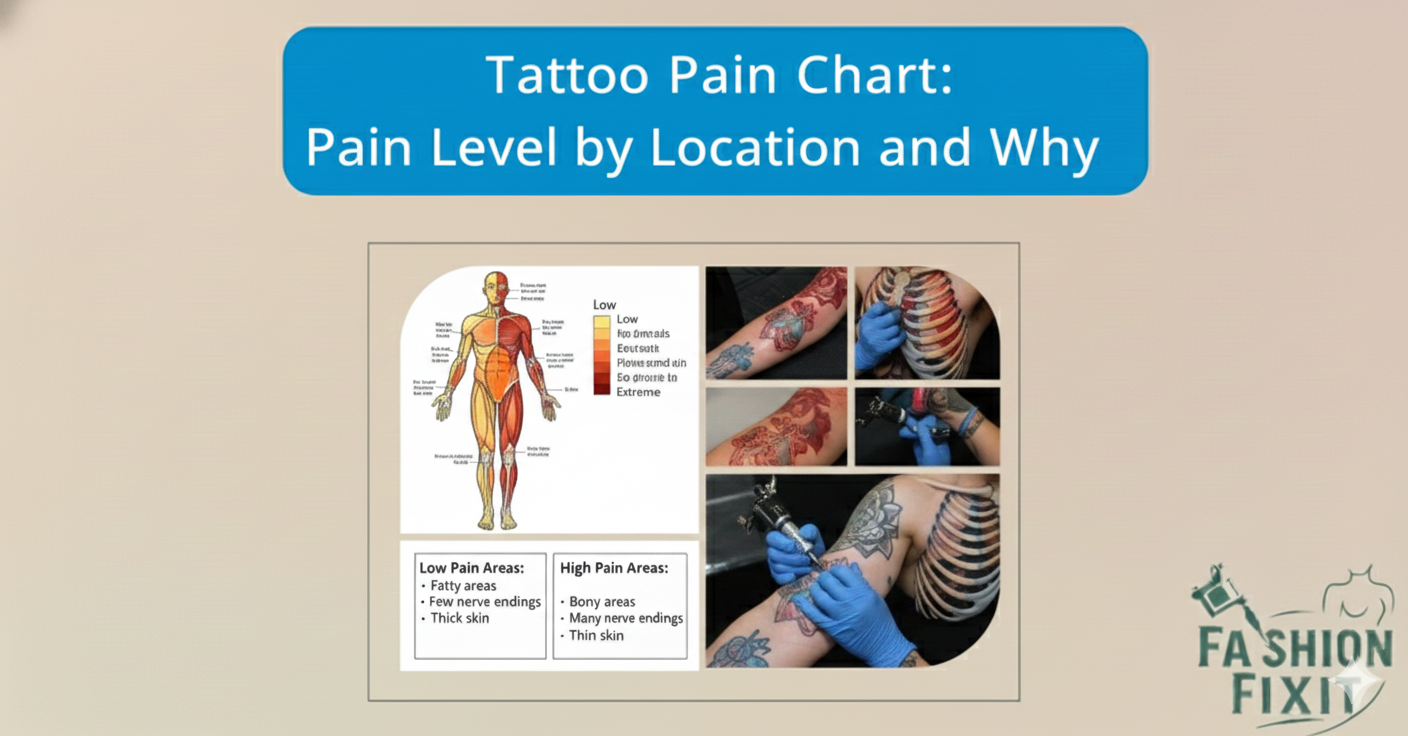
Permanent tattoos cause variable levels of pain produced by repeated needle penetration into dermal tissue, with intensity determined by nerve density, skin thickness, and session duration rather than uniform sensation. Clinical pain models classify tattoo pain as moderate and localised.
Pain Mechanism During Tattooing
Pain mechanism during tattooing is the activation of nociceptors caused by rapid needle perforations that breach epidermal and dermal layers. Each needle cycle stimulates sensory receptors responsible for sharp and burning sensations.
Effect of Body Location on Tattoo Pain
Effect of body location on tattoo pain is the variation in discomfort based on proximity to bone, nerve concentration, and fat distribution. Areas with thin skin and high nerve density produce higher pain intensity than areas with thicker tissue.
Influence of Session Duration on Pain Levels
Influence of session duration on pain levels is the accumulation of inflammatory response and nerve fatigue during prolonged tattoo sessions. Longer sessions increase soreness and sensitivity due to sustained tissue trauma.
Role of Individual Pain Threshold
Role of individual pain threshold is the personal variability in pain perception influenced by neurological sensitivity and psychological factors. Individual tolerance levels create wide differences in reported discomfort.
Skin Condition and Pain Sensitivity
Skin condition and pain sensitivity is the relationship between hydration, inflammation, and barrier strength with pain response during tattooing. Well-hydrated and healthy skin reduces needle resistance and perceived discomfort.
Pain Progression During the Tattoo Process
Pain progression during the tattoo process is the pattern of initial sharp sensation followed by dull aching as nerve receptors adapt. Sensitivity increases again toward session completion due to cumulative irritation.
How Much Do Permanent Tattoos Cost in the U.S.?
Permanent tattoos cost between $50 and $5,000+, depending on tattoo size, design complexity, artist experience, and total session time, with pricing structured around labour, skill level, and material use. Tattoo pricing functions as a service-based cost model rather than a fixed-rate product.
Average Permanent Tattoo Price Ranges
Average permanent tattoo price ranges are tiered by design scale and execution time rather than ink quantity alone. Industry pricing data from professional tattoo studios shows consistent cost segmentation.
Small Permanent Tattoo Costs
Small permanent tattoos cost $50–$300 for minimal designs under 3 inches with basic linework and limited shading. Studio minimum charges account for equipment setup, sterilisation, and consultation time.
Medium Permanent Tattoo Costs
Medium permanent tattoos cost $250–$1,000 for designs measuring 4–6 inches that include shading, moderate detail, or limited colour layering. Increased execution time directly raises labour-based pricing.
Large Permanent Tattoo Costs
Large permanent tattoos cost $1,000–$5,000 or more for sleeves, back pieces, or multi-session designs requiring extensive shading and colour saturation. Multi-session work compounds cost through repeated setup and labour hours.
Hourly Rates for Permanent Tattoo Artists
Permanent tattoo artists charge $80–$300 per hour based on experience level, portfolio demand, and technical specialisation. High-demand artists with advanced realism or colour expertise command premium hourly rates.
Design Complexity and Pricing Impact
Design complexity increases tattoo cost when designs require dense shading, fine detail, or multiple pigment layers that extend session duration. Time investment functions as the primary pricing driver.
Colour Usage and Cost Differences
Colour usage raises permanent tattoo pricing because multicolour work increases pigment usage, cleaning time, and technical precision compared to black-only designs. Colour saturation adds measurable labour intensity.
Placement-Based Cost Variation
Placement-based cost variation occurs when body areas with curves, movement, or sensitivity require slower execution and increased precision. Complex anatomical locations extend session length.
Additional Fees and Deposits
Additional fees and deposits are pre-session charges applied to secure bookings and cover custom design preparation. Deposits typically range from $50 to $200 and apply toward final pricing.
What Are the Health and Safety Considerations for Permanent Tattoos?
Health and safety considerations for permanent tattoos are infection control, pigment safety, immune response management, skin trauma limitation, and disciplined aftercare, all of which directly determine healing quality and long-term skin integrity.
Sterilisation and Infection Prevention
Sterilisation and infection prevention is the elimination of bacterial and viral exposure through single-use needles, disinfected equipment, and sanitised work surfaces. Clinical skin infection audits associate non-sterile tattooing with infection rates exceeding 8–10%.
Pigment Safety and Chemical Exposure
Pigment safety and chemical exposure is the evaluation of ink purity, metal content, and chemical stability within dermal tissue. Certain coloured pigments contain trace nickel, chromium, or azo compounds linked to inflammatory skin responses.
Allergic and Immune System Reactions
Allergic and immune system reactions are cutaneous inflammatory responses triggered by pigment interaction with dermal immune cells. Red and yellow pigments show higher delayed hypersensitivity incidence compared to carbon-based black pigments.
Skin Trauma and Scarring Risk
Skin trauma and scarring risk is the potential for dermal damage caused by excessive needle depth, repeated passes, or improper technique. Improper penetration increases hypertrophic scarring and keloid formation probability.
Bloodborne Pathogen Control
Bloodborne pathogen control is the prevention of disease transmission through strict needle disposal and barrier protection protocols. Controlled tattoo environments reduce exposure to hepatitis and bacterial contamination.
Healing and Aftercare Discipline
Healing and aftercare discipline is the adherence to structured cleaning, moisturising, and activity limitation during wound recovery. Inadequate aftercare increases infection risk and pigment loss during early healing phases.
Long-Term Pigment Migration
Long-term pigment migration is the gradual transport of microscopic ink particles from dermal tissue to lymphatic structures over time. Medical imaging confirms pigment accumulation in regional lymph nodes years after tattoo application.
Chronic Skin Conditions and Risk Assessment
Chronic skin conditions and risk assessment is the evaluation of dermatological disorders such as eczema, psoriasis, and autoimmune disease before tattooing. Compromised skin barriers correlate with delayed healing and elevated complication rates.
How Do You Care for a Permanent Tattoo?
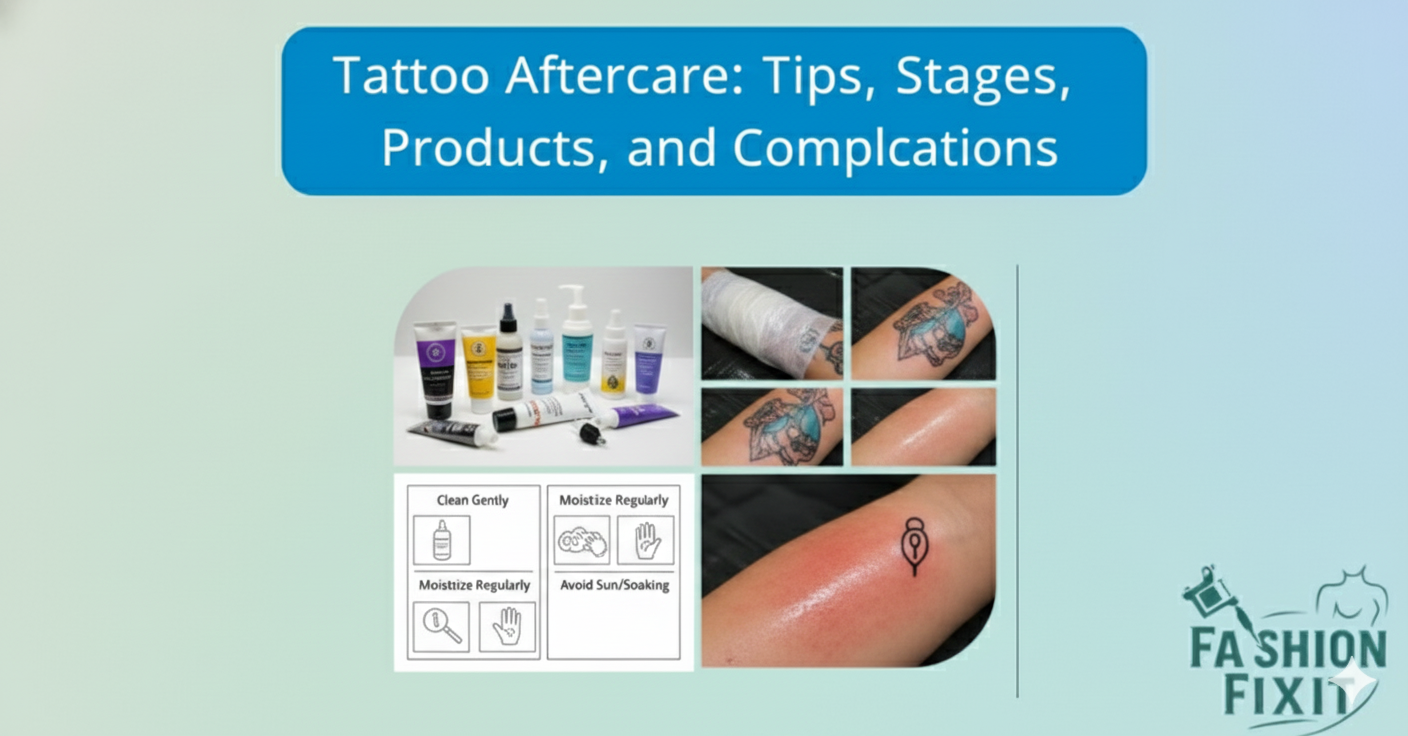
Caring for a permanent tattoo requires systematic cleansing, controlled moisturisation, friction avoidance, moisture restriction, and ultraviolet protection across a 2–6 week healing period to preserve pigment density, minimise infection risk, and stabilise dermal repair.
First-Day Care After Tattooing
First-day care after tattooing involves keeping the protective dressing in place for 2–24 hours, followed by a single gentle cleanse using lukewarm water and fragrance-free cleanser to remove plasma, ink residue, and surface bacteria without abrasion. Air drying limits mechanical irritation.
Cleansing Frequency During Healing
Cleansing frequency during healing equals 2–3 gentle washes per day for 3–7 days using clean hands and fragrance-free cleanser, followed by full rinsing and air drying to control microbial load and prevent softened scab formation. Hot water elevates inflammatory response.
Moisturising and Barrier Support
Moisturising and barrier support requires thin applications 2–4 times daily using fragrance-free, breathable formulations that maintain skin elasticity and reduce cracking during epithelial regeneration. Excessive product application increases maceration risk.
Scabbing and Peeling Control
Scabbing and peeling control depends on leaving flaking skin intact and avoiding mechanical removal because forced disruption increases pigment loss, uneven healing, and scar probability during days 4–14. Intact healing layers protect colour distribution.
Water and Moisture Exposure Limits
Water and moisture exposure limits require short showers and complete avoidance of soaking for 10–14 days because prolonged moisture weakens protective layers and increases bacterial transfer from baths, pools, and natural water sources. Pat drying reduces shear stress.
Clothing and Friction Management
Clothing and friction management involves loose, breathable garments and reduced repetitive movement for 7–10 days because abrasion increases inflammation, delays wound closure, and blurs fine line definition through repeated micro-trauma. Tight fabrics elevate surface irritation.
Sun and Ultraviolet Protection
Sun and ultraviolet protection requires complete sun avoidance during healing and consistent physical sun protection after closure because ultraviolet exposure accelerates pigment breakdown and contrast reduction, particularly in lighter pigment colours. Physical barriers preserve saturation.
Complication and Infection Monitoring
Complication and infection monitoring includes spreading redness beyond tattoo margins, increasing warmth, thick discharge, fever, escalating pain after day two, or rapidly expanding swelling, which indicate clinical evaluation necessity. Early detection limits severity.
Long-Term Tattoo Maintenance
Long-term tattoo maintenance involves regular moisturising and consistent ultraviolet protection because hydrated skin preserves edge definition and sunscreen reduces photodegradation, extending visual clarity and colour stability across long-term ageing cycles.
What Are the Healing Stages of a Permanent Tattoo?
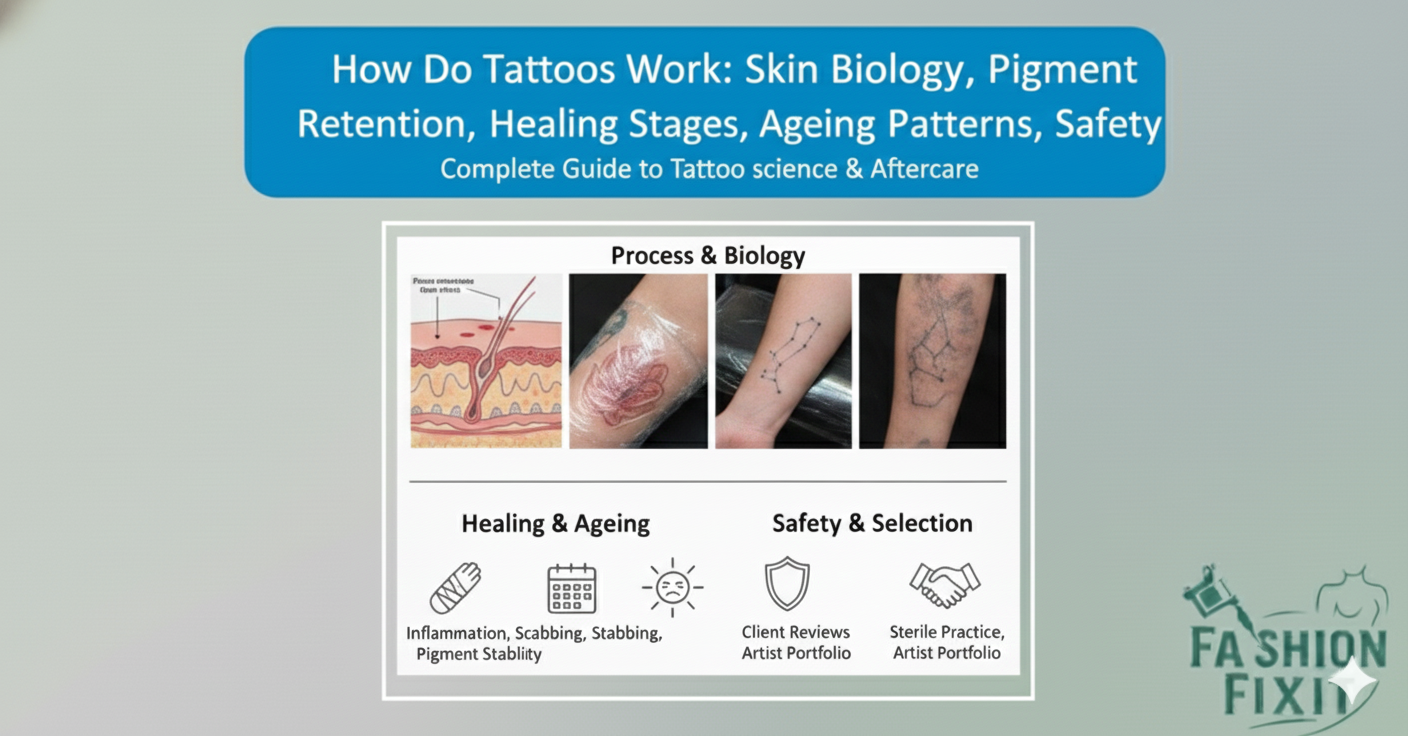
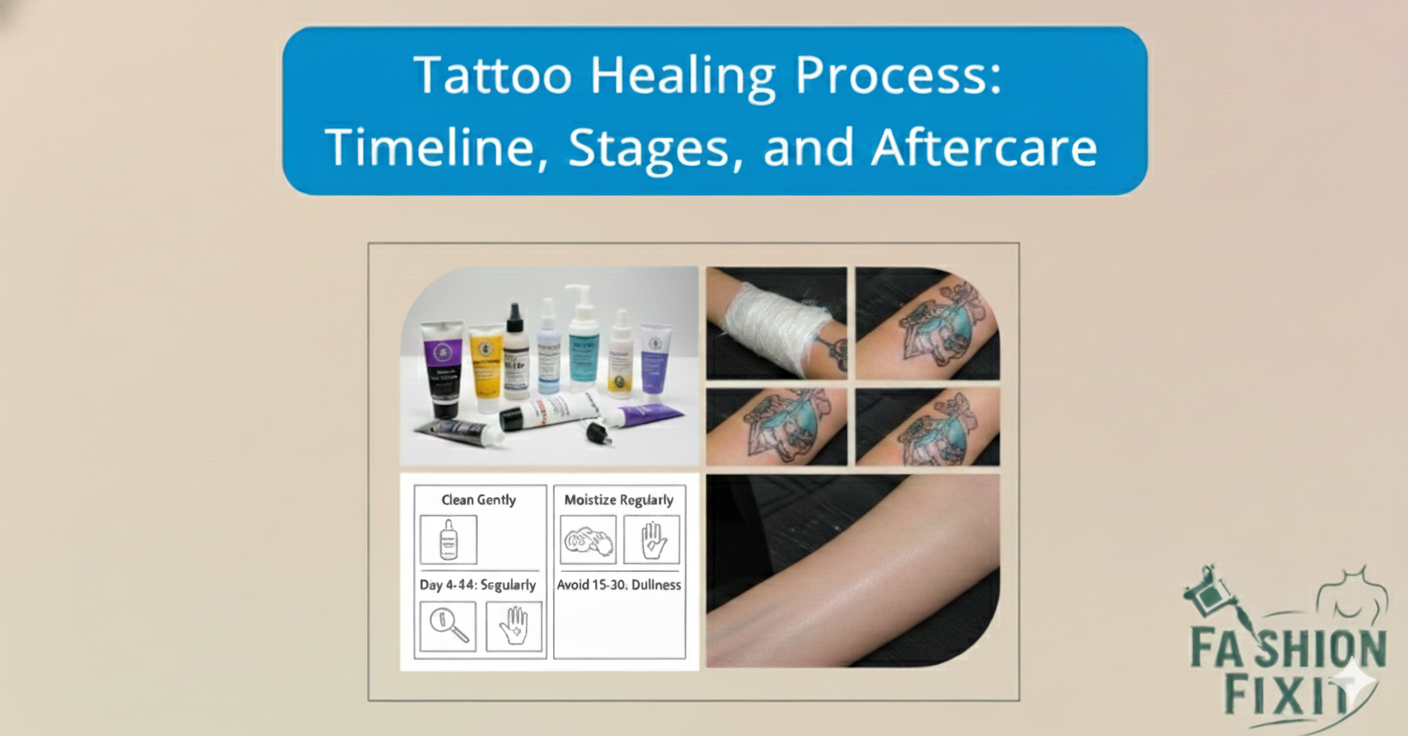
The healing stages of a permanent tattoo are four sequential biological phases—inflammation, scabbing and peeling, dermal regeneration, and skin maturation—that unfold over approximately 2–8 weeks and determine pigment retention, surface clarity, and long-term visual stability.
Inflammatory Stage (Days 1–3)
Inflammatory stage is the immediate wound-response phase marked by redness, swelling, warmth, and plasma exudate as dermal tissue reacts to needle penetration and pigment placement. Increased blood flow initiates immune activity and begins tissue repair.
Scabbing and Peeling Stage (Days 4–14)
Scabbing and peeling stage is the epidermal rebuilding phase where protective crusts form and shed while excess surface pigment exits the skin. Mechanical disturbance during this phase increases patching, pigment loss, and scarring probability.
Dermal Regeneration Stage (Weeks 2–4)
Dermal regeneration stage is the internal repair phase characterised by reduced inflammation, collagen synthesis, and pigment stabilisation within dermal layers. Surface appearance improves while deeper tissue recovery continues.
Skin Maturation Stage (Weeks 4–8)
Skin maturation stage is the final consolidation phase defined by strengthened skin structure, reduced sensitivity, and settled pigment contrast as dermal repair completes. Colour clarity normalises and texture smoothness returns.
What Are the Risks of Permanent Tattoos?
The risks of permanent tattoos are infection, allergic response, scarring, pigment migration, bloodborne exposure, chronic sensitivity, and long-term colour degradation, all arising from dermal injury and foreign pigment retention.
Infection Risk
Infection risk is microbial entry into dermal tissue during needle penetration when sterilisation or aftercare fails. Observed outcomes include folliculitis, cellulitis, and abscess formation during early healing stages.
Allergic and Hypersensitivity Reactions
Allergic and hypersensitivity reactions are immune-mediated inflammatory responses triggered by pigment chemistry within dermal layers. Red, yellow, and blue pigments show higher delayed reaction frequency than carbon-based black pigments.
Scarring and Keloid Formation
Scarring and keloid formation is excess collagen production caused by deep penetration, repeated passes, or genetic scar predisposition. Raised tissue alters surface texture and visual continuity.
Pigment Migration and Line Blurring
Pigment migration and line blurring is the lateral movement of ink particles beyond original boundaries within dermal tissue. Particle size, skin elasticity, and placement influence spread magnitude.
Bloodborne Pathogen Exposure
Bloodborne pathogen exposure is disease transmission risk associated with contaminated needles or improperly sanitised equipment. Single-use needle systems reduce transmission probability.
Chronic Skin Sensitivity
Chronic skin sensitivity is persistent itching, swelling, or irritation months or years after application due to ongoing immune interaction with pigment. Sensitivity commonly localises around coloured ink zones.
Long-Term Pigment Degradation
Long-term pigment degradation is chemical and ultraviolet-driven breakdown of ink particles that alters hue, contrast, and saturation over time. Lighter pigments degrade faster than dark pigments.
Are Permanent Tattoos Safe?
Permanent tattoos are generally safe when performed under sterile conditions using regulated inks and followed by correct aftercare, with low complication rates primarily linked to infection control, pigment sensitivity, and individual skin response rather than the tattooing process itself.
Safety Conditions for Permanent Tattoos
Safety conditions for permanent tattoos are sterile single-use needles, sanitised work surfaces, purified pigment formulations, and controlled needle depth during dermal insertion. Dermatology outcome reviews report complication rates below 5% when these conditions remain consistent.
Medical Evidence on Tattoo Safety
Medical evidence on tattoo safety shows most adverse events are mild and temporary, including redness and swelling, while severe reactions remain uncommon. University dermatology departments attribute higher risk to unregulated environments and improper aftercare rather than tattooing itself.
Pigment and Ink Safety Considerations
Pigment and ink safety considerations involve chemical composition, metal content, and particle stability within dermal tissue. Carbon-based black pigments show the lowest reaction incidence, while red and yellow pigments demonstrate higher sensitivity reports.
Individual Risk Factors
Individual risk factors include allergic predisposition, autoimmune skin conditions, poor wound healing capacity, and keloid-prone skin types. These factors increase complication probability independent of technique quality.
Long-Term Safety Perspective
Long-term safety perspective confirms tattoo pigments remain largely stable within dermal layers, with gradual fading rather than systemic harm observed over decades. Ongoing medical monitoring focuses on pigment migration without evidence of widespread clinical impact.
Can You Remove a Permanent Tattoo and How?
Permanent tattoos can be removed through clinical pigment-disruption methods that break ink particles into smaller fragments for immune clearance, with laser treatment representing the primary evidence-supported removal approach.
Laser Tattoo Removal
Laser tattoo removal is the medical use of high-energy light pulses that fracture pigment particles within dermal layers, enabling gradual lymphatic clearance over multiple sessions. Q-switched and picosecond lasers demonstrate the highest removal efficacy, with black pigment responding fastest due to high light absorption.
Number of Sessions Required
Number of sessions required for tattoo removal equals 6–12 treatments on average, spaced 6–8 weeks apart, depending on pigment colour, depth, particle size, and skin response. Dark inks require fewer sessions than green, yellow, and light blue pigments.
Effect of Pigment Colour on Removal
Effect of pigment colour on removal is the variation in laser responsiveness caused by wavelength absorption differences across pigment chemistries. Black and dark blue pigments fragment efficiently, while yellow and fluorescent pigments resist breakdown.
Skin Location and Removal Efficiency
Skin location and removal efficiency is the influence of blood flow, lymphatic drainage, and dermal thickness on pigment clearance speed. Areas closer to the heart clear pigment faster than distal regions such as ankles or fingers.
Pain and Skin Recovery During Removal
Pain and skin recovery during removal involves short bursts of thermal discomfort followed by temporary redness, swelling, and surface blistering in some cases. Recovery periods typically resolve within 7–14 days per session.
Alternative Tattoo Removal Methods
Alternative tattoo removal methods include surgical excision and dermabrasion, which physically remove pigmented skin but carry higher scarring risk compared to laser techniques. These methods apply only to small tattoos or medical necessity cases.
Limitations of Tattoo Removal
Limitations of tattoo removal are incomplete pigment clearance, residual shadowing, textural skin change, and variable outcomes based on individual immune response. Complete invisibility remains uncommon for large or multicolour designs.
What Are the Legal Age Requirements for Permanent Tattoos in the U.S.?
The legal age requirement for permanent tattoos in the United States is 18 years without parental consent, with minors permitted only under specific state-regulated conditions involving parental consent, presence, or medical exception.
Federal Legal Framework for Permanent Tattoos
Federal legal framework for permanent tattoos sets no unified national tattoo age law, leaving regulation authority to individual states and local health departments. Federal oversight applies indirectly through health, safety, and consumer protection standards rather than age control.
Standard Minimum Age Requirement
Standard minimum age requirement for permanent tattoos is 18 years, which functions as the default legal threshold for autonomous consent across all states. Tattooing a minor without permitted conditions constitutes a legal violation in most jurisdictions.
Parental Consent Rules for Minors
Parental consent rules for minors allow tattooing under age 18 only when a parent or legal guardian provides written consent and, in many states, remains physically present during the procedure. Consent requirements vary by state statute.
States Prohibiting Tattoos for Minors
States prohibiting tattoos for minors enforce complete bans on tattooing individuals under 18 regardless of parental consent, except for medical necessity. These statutes classify non-medical tattooing of minors as unlawful practice.
Medical and Cosmetic Exceptions
Medical and cosmetic exceptions permit tattooing for reconstructive, corrective, or medical identification purposes when performed by licensed medical professionals. Examples include scar camouflage and radiation marker tattoos.
Legal Penalties for Non-Compliance
Legal penalties for non-compliance include fines, license suspension, criminal charges, or permanent license revocation for tattoo operators. Enforcement severity depends on state health code provisions.
Verification and Identification Requirements
Verification and identification requirements mandate government-issued photo identification for age confirmation before tattoo application. Studios maintain records to demonstrate regulatory compliance during inspections.
What Are the Most Popular Permanent Tattoo Placements?
The most popular permanent tattoo placements are anatomical areas that balance visibility, skin thickness, pain tolerance, and long-term ageing behaviour, with placement choice directly influencing line clarity, pigment retention, and design scalability over time.
Forearm Tattoos
Forearm tattoos are permanent tattoos placed on a low-friction, moderately thick skin area that supports sharp linework, strong colour retention, and high daily visibility. Forearm placement accommodates small scripts and large illustrative designs.
Upper Arm Tattoos
Upper arm tattoos are permanent tattoos positioned on stable muscle mass with reduced nerve density, producing lower pain intensity and consistent ageing characteristics. Upper arm placement supports sleeves, realism, and colour-dense designs.
Wrist Tattoos
Wrist tattoos are permanent tattoos located on thin skin with high visibility and symbolic emphasis, often used for minimalist text or small icons. Wrist placement experiences faster fading due to movement and sun exposure.
Shoulder and Shoulder Blade Tattoos
Shoulder and shoulder blade tattoos are permanent tattoos placed on broad, flat surfaces that allow complex compositions and slow distortion over time. Shoulder areas support geometric, floral, and large illustrative designs.
Back Tattoos
Back tattoos are permanent tattoos applied across large skin areas that enable detailed artwork, narrative scenes, and multi-session compositions with minimal daily friction. Back placement offers long-term structural stability.
Chest Tattoos
Chest tattoos are permanent tattoos positioned near the sternum or pectoral region, often chosen for symmetrical or symbolic designs with strong visual impact. Chest placement experiences moderate pain and movement-related stress.
Rib Tattoos
Rib tattoos are permanent tattoos placed on thin skin over bone with high nerve density, producing higher pain levels but strong visual flow. Rib placement favours script, floral, and vertical designs.
Thigh Tattoos
Thigh tattoos are permanent tattoos located on thick skin with ample surface area, supporting large designs, colour saturation, and slower ageing. Thigh placement provides lower pain perception and design flexibility.
Ankle and Foot Tattoos
Ankle and foot tattoos are permanent tattoos placed on high-movement areas with thin skin and increased fading risk. These placements suit small designs due to faster pigment migration.
Neck Tattoos
Neck tattoos are permanent tattoos positioned in highly visible areas with thin skin and accelerated ageing effects. Neck placement demands precise execution due to distortion risk and constant exposure.
Hand and Finger Tattoos
Hand and finger tattoos are permanent tattoos located on high-friction, high-movement skin with rapid fading and frequent touch-up requirements. These placements prioritise symbolism over longevity.
How Do Permanent Tattoos Age and Change Over Time?
Permanent tattoos age and change through gradual pigment diffusion, dermal collagen loss, ultraviolet-driven pigment degradation, and immune-mediated particle clearance, resulting in softened edges, reduced contrast, and colour shift over years rather than disappearance.
Pigment Diffusion Within Dermal Layers
Pigment diffusion within dermal layers is the slow lateral movement of ink particles that causes line softening and minor boundary expansion over time. Fine line tattoos show higher diffusion visibility than bold line tattoos due to smaller particle grouping.
Skin Ageing Effects on Tattoo Structure
Skin ageing effects on tattoo structure are reduced collagen density and elastic fibre breakdown that loosen dermal support and alter edge sharpness. Dermatological ageing data records collagen decline beginning after early adulthood.
Colour Fading and Tonal Shift
Colour fading and tonal shift is the reduction in pigment saturation caused by oxidation, immune clearance, and light exposure. Black pigments retain density longest, while red, yellow, and light blue pigments fade faster.
Ultraviolet Exposure and Photodegradation
Ultraviolet exposure and photodegradation is the chemical breakdown of pigment compounds caused by repeated sun exposure. Unprotected tattoos experience accelerated contrast loss compared to consistently covered skin areas.
Immune System Interaction With Pigment
Immune system interaction with pigment is the continuous capture and transport of fragmented ink particles by dermal macrophages. Immune activity explains gradual lightening rather than sudden pigment loss.
Placement-Based Ageing Differences
Placement-based ageing differences are variations in tattoo ageing speed caused by friction, movement frequency, and dermal thickness across body regions. Hands, feet, and joints age faster than thighs and upper arms.
Line Weight and Design Complexity Impact
Line weight and design complexity impact is the difference in longevity between bold, simplified designs and ultra-fine, highly detailed compositions. Thick outlines maintain clarity longer than micro-line structures.
Long-Term Appearance Over Decades
Long-term appearance over decades is a softened, lower-contrast version of the original design with preserved overall form rather than visual loss. Permanent tattoos remain visible for life, with ageing expressed as refinement rather than removal.
What Do Permanent Tattoos Symbolize?
Permanent tattoos symbolize identity expression, personal narrative, cultural affiliation, belief systems, and life milestones, with meaning shaped by design choice, placement, and lived experience rather than decoration alone.
Identity and Self-Expression
Identity and self-expression is the use of permanent tattoos to communicate individuality, values, and personal aesthetics through enduring body art. Names, portraits, abstract symbols, and custom designs represent self-definition.
Cultural and Heritage Significance
Cultural and heritage significance is the representation of ancestry, tradition, and collective identity through established symbols, patterns, and motifs. Examples include tribal geometry, Japanese iconography, and religious emblems.
Life Events and Milestones
Life events and milestones are commemorations of significant experiences such as birth, loss, recovery, achievement, or transformation. Dates, coordinates, and symbolic imagery mark pivotal moments.
Beliefs and Spiritual Meaning
Beliefs and spiritual meaning is the embodiment of faith, philosophy, or moral principles through sacred symbols, texts, and iconography. Crosses, mandalas, runes, and verses convey belief systems.
Emotional Memory and Healing
Emotional memory and healing is the externalisation of grief, resilience, or personal growth through symbolic imagery linked to emotional experiences. Memorial tattoos and recovery symbols serve as lasting reminders.
Strength, Protection, and Power
Strength, protection, and power is the symbolic use of animals, mythological figures, or geometric forms to represent resilience, courage, and control. Lions, wolves, dragons, and sigils communicate fortitude.
Aesthetic and Artistic Appreciation
Aesthetic and artistic appreciation is the pursuit of visual beauty, balance, and creativity through permanent tattoo art without fixed narrative meaning. Illustrative and abstract styles prioritise form over symbolism.
What Are the Pros and Cons of Permanent Tattoos?
The pros and cons of permanent tattoos are durable identity expression, symbolic permanence, and artistic flexibility balanced against irreversible commitment, medical risk exposure, aesthetic ageing, regulatory limits, and removal constraints, with outcomes determined by pigment behaviour, skin biology, placement selection, and aftercare quality.
Pros of Permanent Tattoos
The advantages of permanent tattoos are given below:
- Express identity: Permanent tattoos communicate personal values, beliefs, and aesthetics through long-lasting dermal art.
- Preserve symbolism: Permanent tattoos retain cultural, spiritual, and emotional meaning without loss from epidermal shedding.
- Ensure durability: Permanent tattoos remain visible for decades due to dermal pigment placement below regenerative skin layers.
- Support customisation: Permanent tattoos enable bespoke design, scale variation, and detailed artistic execution.
- Document milestones: Permanent tattoos mark life events such as birth, recovery, loss, or achievement using enduring visual records.
- Enable artistic continuity: Permanent tattoos integrate into sleeves and large compositions with consistent visual flow.
- Reduce maintenance: Permanent tattoos require no reapplication, replacement, or renewal once healed.
- Strengthen self-association: Permanent tattoos reinforce identity continuity through stable visual markers over time.
Cons of Permanent Tattoos
The disadvantages of permanent tattoos are given below:
- Create irreversible commitment: Permanent tattoos restrict future alteration without medical removal procedures.
- Introduce health risks: Permanent tattoos involve infection, allergic response, scarring, and chronic sensitivity linked to dermal trauma.
- Age visually: Permanent tattoos experience pigment diffusion, contrast reduction, and colour shift due to skin ageing and ultraviolet exposure.
- Limit professional flexibility: Permanent tattoos affect perception in formal or regulated occupational environments when highly visible.
- Complicate removal: Permanent tattoo removal requires multiple sessions, high financial cost, incomplete clearance risk, and potential scarring.
- Vary pigment stability: Permanent tattoos using lighter pigments degrade faster than dark carbon-based pigments.
- Depend on aftercare quality: Permanent tattoos lose clarity and saturation when healing protocols are not followed precisely.
- Restrict placement recovery: Permanent tattoos placed on high-movement or high-friction areas age faster and require more touch-ups.
Are There Any Alternatives to Permanent Tattoos?
Alternatives to permanent tattoos are non-permanent, semi-permanent, or non-ink body-art methods that provide visual expression without lifelong dermal pigment retention, differing by skin penetration depth, duration, reversibility, and symbolic permanence.
Temporary Skin-Surface Methods
Temporary skin-surface methods are epidermal design approaches that apply colour or imagery without dermal penetration and fade through natural skin turnover. Henna staining fades within 7–21 days based on epidermal renewal. Jagua binding to surface proteins fades within 10–20 days. Transfer and airbrush designs remove within 1–7 days through washing and friction.
Semi-Permanent Pigmentation Methods
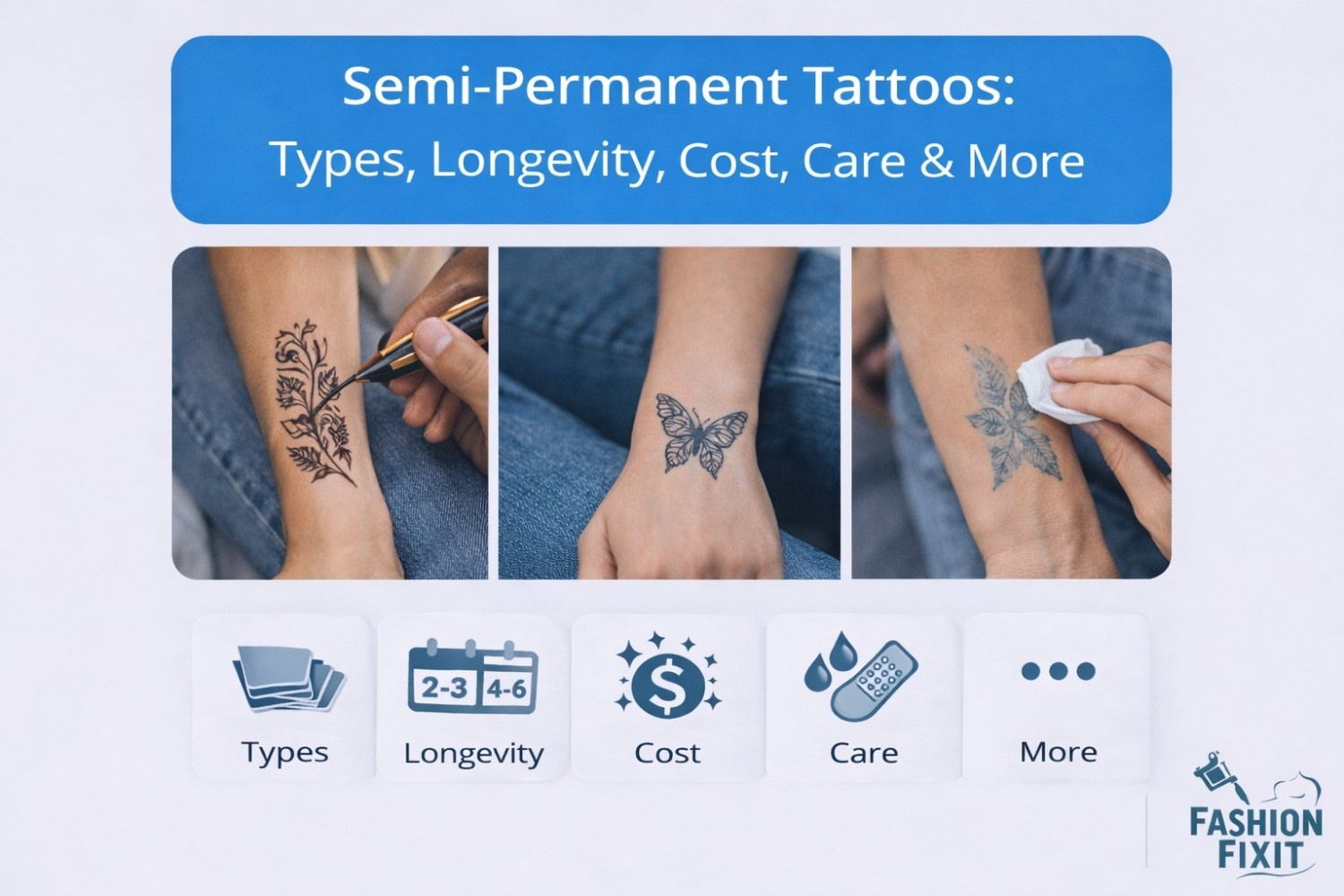
Semi-permanent pigmentation methods are shallow skin-colouring techniques that place biodegradable or cosmetic pigment above deep dermal layers and fade over extended timeframes. Ephemeral ink clears within 9–15 months through immune processing. Cosmetic micropigmentation for brows, lips, or scalp fades within 1–3 years. Freckle and beauty-mark pigmentation fades within 6–18 months.
Non-Ink Body Modification Methods
Non-ink body modification methods are appearance-altering practices that avoid pigment implantation while maintaining symbolic or aesthetic expression. Body jewellery and piercings provide removable symbolism. Body paint delivers full-colour designs that wash off completely. Scarification and branding create permanent texture changes without ink use.
Cosmetic and Removable Visual Methods
Cosmetic and removable visual methods are surface-applied products or wearables that simulate tattoo appearance without skin penetration. Tattoo makeup produces realistic designs that wash off. Fabric tattoo sleeves replicate coverage and remove instantly. Skin-safe pens create hand-drawn designs that fade within several days.
Digital and Virtual Representation Methods
Digital and virtual representation methods are non-physical display approaches that present tattoo designs through technology rather than skin modification. Augmented-reality overlays display designs in real time. Digital simulations preview placement, scale, and composition before commitment.
How Do You Choose the Right Permanent Tattoo Design?
Choosing the right permanent tattoo design requires evaluating symbolic relevance, structural longevity, anatomical suitability, and ageing behaviour to ensure visual clarity, personal meaning, and aesthetic stability across decades of skin change.
Symbolic Meaning and Long-Term Relevance
Symbolic meaning and long-term relevance is the alignment of tattoo imagery with identity, values, cultural reference, or life events that retain significance over extended timeframes. Dates, names, belief symbols, and abstract forms provide durable narrative anchors.
Design Timelessness and Trend Resistance
Design timelessness and trend resistance is the selection of visual concepts that remain culturally and personally relevant beyond short-term aesthetic trends. Classic motifs and simplified compositions age more predictably than trend-driven styles.
Line Weight and Structural Integrity
Line weight and structural integrity is the balance between stroke thickness, spacing, and detail density to minimise blur and diffusion as dermal tissue changes. Bold line frameworks maintain legibility longer than ultra-fine line execution.
Body Placement Compatibility
Body placement compatibility is the relationship between design scale, orientation, and body movement patterns that affect distortion and wear. Low-friction, stable areas support complex detail, while high-movement areas favour simplified forms.
Size, Scale, and Proportion
Size, scale, and proportion is the adjustment of design dimensions to preserve readability and visual balance within the chosen anatomical area. Undersized tattoos lose definition faster than proportionally scaled designs.
Colour Selection and Fade Behaviour
Colour selection and fade behaviour is the evaluation of pigment longevity, contrast retention, and interaction with skin tone over time. Black and dark pigments retain density longer than light, pastel, or fluorescent pigments.
Artist Technical Alignment
Artist technical alignment is the matching of design intent with artist specialisation such as realism, linework precision, or colour saturation control. Style alignment increases execution accuracy and long-term quality.
Future Composition Planning
Future composition planning is the consideration of potential expansions, sleeve integration, or adjacent design balance to maintain visual cohesion. Planned continuity prevents compositional fragmentation over time.
Should You Get a Permanent Tattoo?
A permanent tattoo is appropriate for individuals who accept irreversible dermal pigment placement, maintain long-term symbolic relevance for the design, and tolerate gradual visual ageing effects linked to skin biology, lifestyle exposure, and pigment behaviour.
Permanence and Commitment Evaluation
Permanence and commitment evaluation is the assessment of acceptance for lifelong body modification without guaranteed full reversal. Laser removal involves multiple sessions, partial clearance probability, and residual skin change.
Skin Health and Biological Suitability
Skin health and biological suitability is the alignment of healing capacity, immune response, and scar tendency with dermal tattooing requirements. Active eczema, psoriasis, keloid predisposition, and autoimmune conditions increase complication frequency.
Design Meaning Stability
Design meaning stability is the likelihood that selected imagery retains personal, cultural, or symbolic relevance across decades. Time-independent symbols show lower regret incidence than trend-driven graphics.
Placement and Visibility Impact
Placement and visibility impact is the influence of anatomical location on professional context, social perception, friction exposure, and ultraviolet radiation. High-visibility placements amplify contextual consequences.
Ageing and Visual Change Acceptance
Ageing and visual change acceptance is the tolerance for pigment diffusion, line softening, and colour shift caused by dermal collagen loss and photodegradation. Bold line structures preserve clarity longer than ultra-fine detail.
Financial and Maintenance Capacity
Financial and maintenance capacity is the ability to support initial tattoo cost, potential touch-ups, sun protection, and long-term skin care. Large or complex designs increase lifetime investment.
Certainty Versus Alternatives Assessment
Certainty versus alternatives assessment is the comparison between permanent tattoos and non-permanent body-art options when permanence confidence remains limited. Temporary and semi-permanent methods reduce irreversible exposure.
Conclusion
A permanent tattoo is a lifelong skin modification that combines personal meaning, biological permanence, and long-term visual change rather than a purely aesthetic decision. Outcomes depend on informed design selection, appropriate placement, skin health, pigment behaviour, regulated application, and disciplined aftercare. Ageing effects, health considerations, legal limits, cost, pain tolerance, and removal constraints shape long-term satisfaction. Evaluating symbolism, alternatives, and irreversible commitment ensures alignment with identity, lifestyle, and acceptance of gradual change over time.