
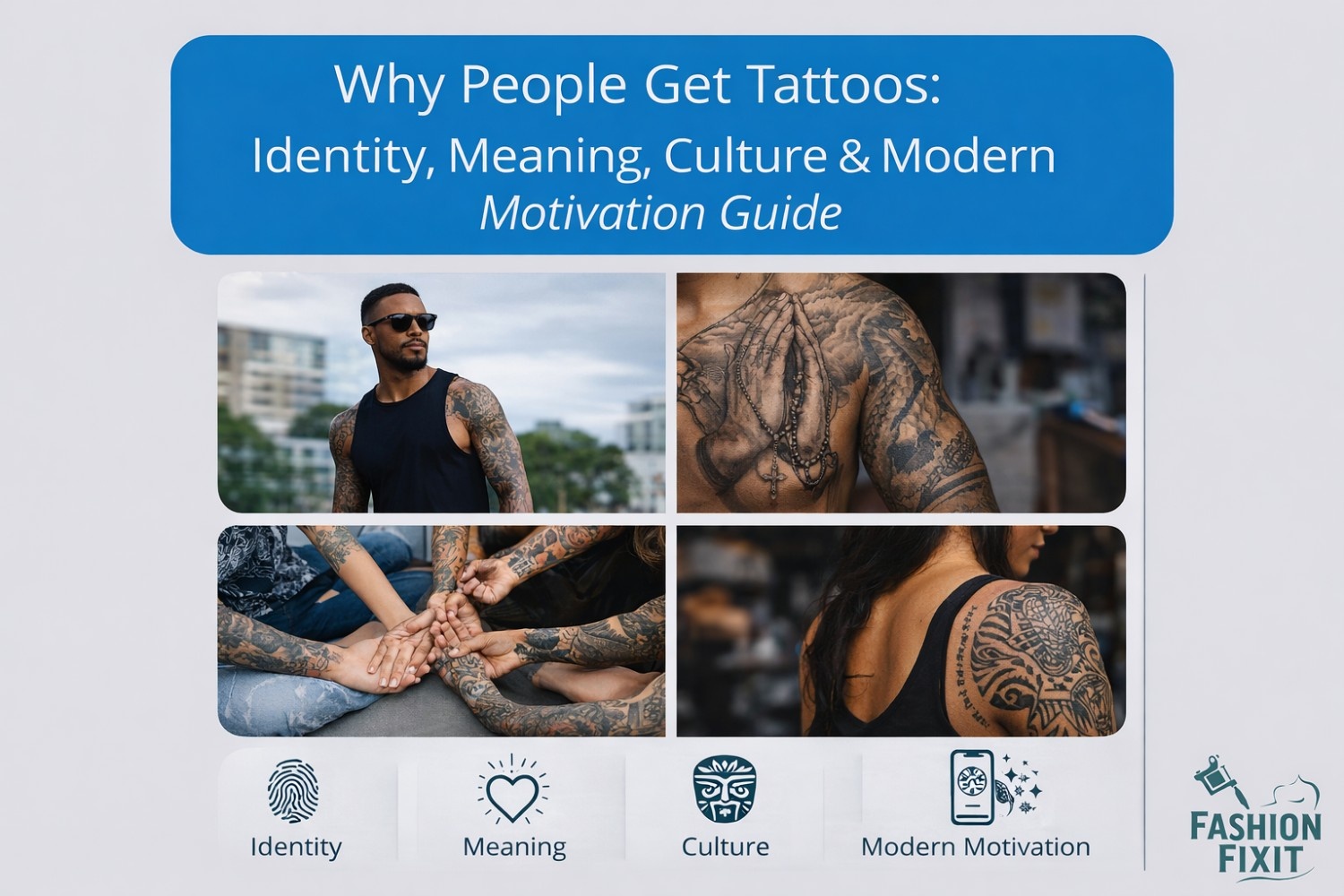
People get tattoos for identity expression, personal meaning, emotional healing, aesthetic preference and cultural belonging. Tattoo motivation expands across psychology, history, spirituality, fashion and social behaviour, which means tattoo meaning depends on individual experience, demographic background and evolving cultural trends.
Tattoos function as permanent symbols that communicate identity, preserve memories, support emotional regulation and reinforce life-stage transitions. Cultural traditions shape tattoo purpose through ritual significance, social classification and heritage continuity. Modern motivations include fashion styling, digital-era influence, wellness integration and personal branding. Psychological factors such as self-esteem reinforcement, autonomy assertion and trauma integration strengthen tattoo intention. Career aspirations guide placement and visibility, while demographic groups adopt tattoos for different reasons linked to age, gender and social environment. First-tattoo decisions reflect identity discovery, emotional expression and milestone recognition, while heavily tattooed individuals pursue narrative continuity, aesthetic cohesion and long-term lifestyle alignment. Tattoo regret emerges when meaning changes, expectations mismatch or social context shifts. Responsible decision-making requires evaluating personal meaning, long-term relevance, placement suitability and emotional readiness.
This article explains why tattoos matter, how motivations differ from person to person, and how tattoo meaning continues to evolve across modern culture.
What is a Tattoo?
A tattoo is a permanent skin marking formed through dermal pigment insertion. According to Harvard Medical School research from the Cutaneous Biology Division in 2025, dermal pigment insertion produces long-term pigment retention through macrophage–fibroblast cycling that stabilises tattoo colour, tattoo pattern geometry and tattoo design detail across multiple tattoo applications.
Tattoos form permanent skin markings through controlled needle puncture. According to University of California Biomedical Sciences research from 2025, tattoo needle penetration generates uniform pigment dispersion across dermal layers that strengthens tattoo identity signalling, supports tattoo self-expression behaviours and structures tattoo meaning frameworks shaped by symbolic tattoo motifs, commemorative tattoo inscriptions and decorative tattoo patterns.
What are the Main Reasons People Get Tattoos?
The main reasons people get tattoos are identity expression, personal meaning formation, memory preservation, aesthetic enhancement, social belonging, cultural or spiritual meaning, emotional coping and curiosity-driven experimentation. According to a 2023 national survey by Pew Research Center, 69% of tattooed adults mention honouring or remembering someone, 47% mention belief statements and 32% mention appearance improvement as core tattoo reasons.
Identity Expression
Identity expression is a primary tattoo reason grounded in personal symbolism and self-definition. Identity-focused tattoo choices include narrative tattoo motifs, value-signalling tattoo inscriptions and archetypal tattoo icons that align tattoo imagery with personality traits, lifestyle patterns and long-term self-concept structures. Research from Anglia Ruskin University identifies self-expression as a central psychological function of tattoos.
Personal Meaning Formation
Personal meaning formation is a central tattoo reason shaped by values, beliefs and life transitions. Meaning-centred tattoo reasons include motivational tattoo symbols, philosophical tattoo statements and milestone tattoo dates that encode goals, ethical positions and turning points such as graduation, recovery or relocation inside visible tattoo narratives.
Memory Preservation
Memory preservation is a dominant tattoo reason focused on honouring people, events and experiences. Pew Research Center reports that 69% of tattooed adults name honouring or remembering someone or something as a reason for at least one tattoo, which confirms memorial tattooing as the most frequently reported tattoo motivation. Memorial tattoo reasons include names, portraits, dates, meaningful objects and children’s drawings.
Aesthetic Enhancement
Aesthetic enhancement is a major tattoo reason centred on body art design and visual composition. The same Pew survey reports that 32% of tattooed adults mention improving appearance as a tattoo reason, which confirms a substantial aesthetic tattoo segment. Aesthetic tattoo reasons include decorative tattoo patterns, body-contouring tattoo placements and style-coordinated tattoo designs that integrate with clothing, jewellery and hairstyle choices.
Social Belonging
Social belonging is a significant tattoo reason linked to group identity and community recognition. Social tattoo reasons include shared tattoo emblems for friendship groups, musical subcultures, sports communities and professional circles. Cultural analysis of tattoo practices shows that group tattoos function as visible membership markers and strengthen perceived in-group cohesion.
Cultural and Spiritual Meaning
Cultural and spiritual meaning is an important tattoo reason connected to heritage, ritual and belief systems. Anthropological research on tattoo traditions documents tattoos as markers of lineage, clan affiliation and rite-of-passage stages, including adulthood or marital status. Cultural tattoo reasons include traditional motif preservation, language or script protection and spiritual symbol display linked to protection, guidance or gratitude.
Emotional Coping and Healing
Emotional coping and healing is a recognised tattoo reason associated with psychological regulation and body ownership. Psychvarsity’s synthesis of tattoo psychology notes that some individuals use tattoos to cope with emotional pain, regain control over the body and transform distressing experiences into structured visual narratives. Emotional coping tattoo reasons include tattoos after bereavement, illness recovery, relationship breakdown or trauma processing.
Curiosity and Experimentation
Curiosity and experimentation is a secondary tattoo reason driven by novelty seeking and aesthetic exploration. Contemporary psychology writing on tattoo behaviour describes a subset of tattoo wearers who pursue tattoos as creative experimentation, collection-building or sensation seeking rather than deep symbolic communication. Curiosity-based tattoo reasons include flash designs selected from studio walls, trend-led motifs and experimental placements chosen to explore body art without strong narrative content.
What Are the Psychological Reasons People Get Tattoos?
The psychological reasons people get tattoos are identity construction, emotional regulation, self-esteem reinforcement, memory integration, autonomy assertion and social cognition signalling. Psychological literature classifies these tattoo behaviours as structured responses to self-definition, emotional processing and meaning-making across life stages.
Identity Construction
Identity construction is a primary psychological tattoo reason grounded in self-definition and symbolic representation. Identity-focused tattoo psychology includes narrative tattoo motifs, archetypal tattoo symbols and value-based tattoo inscriptions that organise personal identity traits, belief structures and lifestyle commitments into stable visual markers that strengthen long-term self-concept formation.
Emotional Regulation
Emotional regulation is a major psychological tattoo reason associated with coping, healing and emotional anchoring. Emotional regulation tattoo psychology includes post-loss symbols, recovery-themed designs and resilience markers that transform distress, grief or transition-related emotions into structured visual forms that stabilise affective states and support psychological integration.
Self-Esteem Reinforcement
Self-esteem reinforcement is a common psychological tattoo reason linked to self-worth, confidence and empowerment. Self-esteem tattoo psychology includes affirmational tattoo statements, achievement markers and body-ownership tattoos that reinforce competence, assertiveness and perceived personal value through repeated visual exposure and embodied representation.
Memory Integration
Memory integration is a significant psychological tattoo reason focused on anchoring autobiographical memory. Memory integration tattoo psychology includes commemorative symbols, date markers and portrait tattoos that organise emotionally significant experiences into coherent memory structures that strengthen continuity between past events and present identity.
Autonomy Assertion
Autonomy assertion is a psychological tattoo reason connected to control, agency and personal independence. Autonomy-based tattoo psychology includes spontaneous tattoo decisions, self-directed design choices and boundary-setting tattoo inscriptions that reinforce personal agency, bodily autonomy and decision-making authority over one’s appearance and narrative.
Social Cognition Signalling
Social cognition signalling is a psychological tattoo reason shaped by interpersonal perception, group belonging and social meaning. Social cognition tattoo psychology includes community emblems, cultural symbols and interaction-driven tattoo motifs that communicate identity cues, strengthen social alignment and influence how individuals are perceived within peer groups or cultural circles.
How Has Culture Shaped Why People Get Tattoos Throughout History?
Culture has shaped why people get tattoos through identity marking, ritual initiation, social classification, spiritual protection, status recognition and community affiliation across historical periods. Anthropological records from multiple regions document tattoo functions that consistently align tattoo meaning with cultural structure, symbolic belief systems and social organisation.
Identity Marking
Identity marking is a historical cultural tattoo function that defines lineage, occupation and community role. Archaeological findings from Polynesia, Egypt and early Eurasian societies show identity-based tattoo patterns that classify family groups, specialist roles and clan affiliations through structured geometric tattoo motifs and repeated symbolic markers.
Ritual Initiation
Ritual initiation is a cultural tattoo function that marks transitions such as adulthood, skill mastery or marital status. Ethnographic accounts of Indigenous communities describe tattoo initiation sequences that use location, repetition and motif variation to signal developmental passage, readiness for responsibility and acceptance into defined social categories.
Social Classification
Social classification is a cultural tattoo function that differentiates rank, hierarchy and social responsibility. Historical tattoo practices in regions such as Samoa, Japan and Arctic communities used structured tattoo systems to denote leadership rank, warrior designation, artisan class or community service obligations through precision-patterned visual codes.
Spiritual Protection
Spiritual protection is a cultural tattoo function linked to belief systems, cosmology and symbolic safeguarding. Cultural tattoo motifs include amuletic signs, protective deities and cosmological diagrams that reflect community-level interpretations of harm prevention, guidance and metaphysical support across historical tattoo traditions.
Status Recognition
Status recognition is a cultural tattoo function that represents honour, accomplishment and societal contribution. Historic records from Southeast Asia, Central Asia and Indigenous American nations document tattoo awarding practices tied to hunting success, battle achievement or craftsmanship excellence, with each tattoo symbol reinforcing measurable social status.
Community Affiliation
Community affiliation is a cultural tattoo function that strengthens collective identity, shared heritage and cultural continuity. Community-level tattoo systems include tribe-specific motifs, ancestral pattern sequences and region-specific symbols that support cultural memory preservation, intergenerational knowledge transfer and collective belonging throughout historical tattoo development.
How Do Tattoos Serve as a Form of Personal and Artistic Expression?
Tattoos serve as a form of personal and artistic expression by externalising identity, visualising individuality, communicating meaning and transforming the body into an intentional artistic surface. Tattoo expression integrates symbolic design, aesthetic composition and narrative structure into a stable visual language.
Personal Symbolism
Personal symbolism is a core expressive tattoo function that communicates beliefs, values and internal narratives. Personal symbolism includes archetypal symbols, philosophical statements and value-driven motifs that convert abstract identity components into visible forms that reinforce self-definition and psychological clarity.
Narrative Communication
Narrative communication is an expressive tattoo function that organises life stories into visual sequences. Narrative tattoo expression includes milestone dates, transformative event markers and memory-anchoring images that structure autobiographical meaning and create coherent life-story representation across the body.
Aesthetic Creativity
Aesthetic creativity is an expressive tattoo function grounded in design choice, spatial composition and artistic experimentation. Aesthetic tattoo expression includes stylised linework, geometric structures, illustrative compositions and colour-driven design systems that reflect aesthetic preference and creative direction.
Style Identity
Style identity is an expressive tattoo function that aligns personal style with recurring artistic themes. Style-based tattoo expression includes minimalism, realism, traditional forms, abstract systems and ornamental patterns that communicate artistic orientation and shape visual identity within broader aesthetic categories.
Body as Canvas
Body as canvas is an expressive tattoo function that treats the body as a structured artistic medium. Body-oriented tattoo expression includes contour-following placements, proportion-enhancing compositions and layout-driven full-body concepts that integrate anatomical structure with intentional artistic design.
Why Do People Get Memorial and Commemorative Tattoos?
People get memorial and commemorative tattoos to preserve memory, honour relationships, stabilise emotional meaning and create a permanent visual anchor for significant life events. Memorial tattoo meaning integrates remembrance, identity continuity and emotional grounding inside a single symbolic form.
Memory Preservation
Memory preservation is a primary commemorative tattoo function that stabilises autobiographical memory. Memory-preserving tattoo choices include portraits, dates, signatures and meaningful objects that anchor pivotal memories and reinforce long-term emotional connection to people, places or experiences.
Relationship Honour
Relationship honour is a commemorative tattoo function that expresses gratitude, loyalty and enduring attachment. Honour-based tattoo motifs include names, phrases, shared symbols and bond-defining imagery that maintain relational identity and represent lasting interpersonal significance.
Emotional Grounding
Emotional grounding is a commemorative tattoo function that regulates grief, transition and emotional change. Emotional grounding tattoos include remembrance symbols, healing motifs and resilience markers that structure difficult emotions, reduce distress intensity and support psychological integration after loss.
Life Event Recognition
Life event recognition is a commemorative tattoo function that marks pivotal turning points. Event-based tattoo selections include birth dates, recovery milestones, achievements or transformative moments that organise personal history into visible chronological markers.
Legacy Continuity
Legacy continuity is a commemorative tattoo function that maintains intergenerational meaning and personal heritage. Legacy-focused tattoo choices include family crests, ancestral symbols and culturally significant motifs that extend memory across generations and reinforce lineage-based identity structures.
Can Getting a Tattoo Be a Healing Experience?
Getting a tattoo can be a healing experience because tattoo meaning supports emotional regulation, trauma integration, body reclamation and narrative reconstruction. Healing tattoo functions organise distress into symbolic structure that stabilises emotion and strengthens psychological resilience.
Emotional Regulation
Emotional regulation is a healing tattoo function that reduces emotional intensity through symbolic transformation. Regulation-centred tattoo choices include affirmational motifs, grief markers and recovery symbols that convert overwhelming emotion into manageable visual form and support steady emotional processing.
Trauma Integration
Trauma integration is a healing tattoo function that reorganises traumatic memory into controlled narrative representation. Integration-focused tattoo designs include symbolic anchors, protective imagery and transformation motifs that help restructure traumatic associations and support post-trauma coherence.
Body Reclamation
Body reclamation is a healing tattoo function that restores bodily autonomy after distress, illness or violation. Reclamation-centred tattoo decisions include scar-covering designs, empowerment symbols and body-ownership motifs that reinforce agency and strengthen control over bodily identity.
Identity Reconstruction
Identity reconstruction is a healing tattoo function that rebuilds personal meaning after major life disruption. Reconstruction-focused tattoo designs include milestone markers, rebirth symbols and directional imagery that create continuity between past, present and future identity structures.
Grief Processing
Grief processing is a healing tattoo function that stabilises mourning and preserves emotional bonds. Grief-oriented tattoo motifs include memorial portraits, names, dates and remembrance icons that anchor connection, support emotional expression and reinforce enduring attachment during loss adaptation.
Why Do People Get Spiritual or Religious Tattoos?
People get spiritual or religious tattoos to express belief systems, reinforce spiritual identity, honour sacred traditions and create symbolic protection through visually encoded faith markers. Spiritual tattoo meaning aligns inner conviction with stable external representation that strengthens personal and devotional narratives.
Belief Expression
Belief expression is a spiritual tattoo function that visualises faith principles and doctrinal values. Belief-oriented tattoo motifs include sacred texts, scripture excerpts, divine names and symbolic shapes that externalise foundational convictions and reinforce daily spiritual awareness.
Sacred Symbolism
Sacred symbolism is a religious tattoo function that conveys theological meaning through established iconography. Symbol-based tattoo choices include crosses, mandalas, angels, chakras and ancestral emblems that encode cosmology, moral philosophy and spiritual orientation into structured visual forms.
Spiritual Protection
Spiritual protection is a religious tattoo function linked to safeguarding, guidance and metaphysical support. Protection-driven tattoo designs include amulets, protective deities, directional symbols and sacred geometric forms that represent defence from harm and alignment with perceived divine oversight.
Ritual Significance
Ritual significance is a spiritual tattoo function that marks rites, vows and life-cycle ceremonies. Ritual-centred tattoo choices include initiation markers, pilgrimage symbols and covenant representations that document spiritual milestones and affirm long-term religious commitment.
Ancestral Connection
Ancestral connection is a spiritual tattoo function that honours lineage, heritage and intergenerational belief systems. Ancestral tattoo motifs include clan symbols, tribal patterns and cultural cosmograms that maintain continuity with predecessor traditions and reinforce collective spiritual identity.
Inner Transformation
Inner transformation is a spiritual tattoo function associated with personal growth, renewal and self-realisation. Transformation-focused tattoo imagery includes rebirth symbols, enlightenment markers and metaphysical diagrams that represent internal change, moral progression and spiritual awakening.
How Have Tattoos Become a Fashion Statement?
Tattoos have become a fashion statement because tattoo design trends, aesthetic placement strategies, stylistic innovation and fashion–body art integration shape how tattoos influence visual identity. Fashion-driven tattoo meaning aligns body art with contemporary style systems, personal branding and cultural aesthetics.
Trend Adoption
Trend adoption is a fashion tattoo function that aligns tattoo choices with prevailing design movements. Fashion-aligned tattoo trends include minimal linework, fine-needle detailing, micro-symbol placement and abstract geometry that follow seasonal aesthetic shifts and stylistic innovation cycles observed across fashion culture.
Visual Styling
Visual styling is a fashion tattoo function that coordinates tattoo placement with clothing, accessories and overall silhouette. Styling-focused tattoo decisions include collarbone motifs, wrist detailing, ankle designs and rib-line compositions that enhance outfit structure, highlight contours and support coherent fashion presentation.
Aesthetic Identity
Aesthetic identity is a fashion tattoo function that communicates stylistic orientation through consistent artistic themes. Aesthetic-identity tattoo selections include minimalist schemes, maximalist compositions, monochrome palettes and illustrative styles that synchronise body art with personal fashion categories such as streetwear, luxury, avant-garde or heritage aesthetics.
Body Accentuation
Body accentuation is a fashion tattoo function that enhances proportions and highlights anatomical lines. Accentuation-oriented tattoo placements include shoulder arcs, spine sequences and thigh contours that refine symmetry, guide visual attention and support fashion-focused silhouette shaping.
Cultural Influence
Cultural influence is a fashion tattoo function driven by media visibility, celebrity styling and trend diffusion. Cultural-influence tattoo adoption includes motifs, placements and styles popularised by public figures, runway presentations and editorial features that accelerate widespread fashion acceptance of specific tattoo forms.
Personal Branding
Personal branding is a fashion tattoo function that integrates body art into an individual’s recognisable visual signature. Branding-oriented tattoo choices include repeat stylistic motifs, cohesive theme clusters and curated placement strategies that create consistent aesthetic identity and distinguish personal fashion expression.
Why Did Tattoos Become Associated with Counterculture and Rebellion?
Tattoos became associated with counterculture and rebellion because tattoo meaning aligned with resistance symbolism, norm refusal, boundary transgression, subcultural identity building and opposition to dominant social structures. Countercultural tattoo expression formed a visual language that differentiated insiders from mainstream groups.
Resistance Symbolism
Resistance symbolism is a countercultural tattoo function that marks opposition to prevailing norms. Resistance-oriented tattoo motifs include anti-establishment symbols, protest imagery and ideological statements that communicate dissent, critique authority and reinforce commitment to alternative value systems.
Norm Refusal
Norm refusal is a countercultural tattoo function that rejects conventional expectations regarding body appearance. Norm-refusal tattoo choices include visible placements, unconventional motifs and rule-breaking aesthetic decisions that challenge social conformity and assert freedom over bodily presentation.
Subcultural Identity
Subcultural identity is a countercultural tattoo function that strengthens belonging to alternative communities. Subculture-based tattoo forms include punk graphics, biker emblems, skate culture symbols and underground art styles that define group boundaries and reinforce shared unconventional identity.
Boundary Transgression
Boundary transgression is a countercultural tattoo function that breaks social taboos and expands acceptable visual expression. Transgressive tattoo choices include experimental styles, provocative imagery and disruptive placement strategies that destabilise traditional body norms and promote cultural innovation.
Social Opposition
Social opposition is a countercultural tattoo function that visualises rejection of dominant social expectations. Opposition-centred tattoo themes include anti-authority statements, critical slogans and symbolic defiance that encode resistance and emphasise alternative moral, political or artistic values.
Identity Autonomy
Identity autonomy is a countercultural tattoo function that asserts personal independence and self-governance. Autonomy-driven tattoo decisions include self-designed motifs, spontaneous tattoo selection and expressive compositions that highlight the individual’s right to define identity outside external judgement.
Do Different Demographics Have Different Reasons for Getting Tattoos?
Different demographics have different reasons for getting tattoos because tattoo meaning shifts across age, gender, culture and socioeconomic background. Demographic variation influences identity formation, aesthetic preference, symbolic interpretation and motivational priority within tattoo decision-making.
Age Differences
Age differences shape tattoo motivation through developmental stage, identity needs and life-transition meaning. Younger demographic groups prioritise self-expression, stylistic experimentation and peer-group alignment, while older demographic groups prioritise memory preservation, milestone recognition and symbolic continuity linked to long-term identity structure.
Gender Differences
Gender differences influence tattoo motivation through aesthetic preference, symbolic emphasis and identity representation. Many women prioritise meaning-centred motifs, body-contouring aesthetics and commemorative symbolism, while many men prioritise emblematic forms, cultural identity markers and visually assertive compositions that reinforce strength or status themes.
Cultural Background
Cultural background shapes tattoo motivation through heritage, tradition and collective identity frameworks. Heritage-oriented groups emphasise ancestral motifs, ritual significance and traditional pattern systems, while multicultural groups adopt hybrid styles that merge contemporary aesthetics with culturally rooted symbolism.
Socioeconomic Variation
Socioeconomic variation influences tattoo motivation through access, exposure and stylistic environment. Higher socioeconomic groups prioritise fine-line minimalism, custom artistry and curated placement strategies, while other groups prioritise symbolic clarity, community identity motifs and accessible studio formats that reinforce shared meaning.
Generational Trends
Generational trends define tattoo motivation through shifting social norms and fashion cycles. Younger generations adopt tattoos as lifestyle identity markers, aesthetic accessories and personal branding elements, while older generations adopt tattoos as narrative anchors, memorial symbols and meaning-preservation structures.
Occupational Influence
Occupational influence shapes tattoo motivation through professional identity, community alignment and role expression. Creative industries prioritise artistic experimentation, stylised motifs and visible placement, while service, trade and technical sectors emphasise community affiliation, skill symbols and personal meaning markers.
How Do Generational Differences Affect Tattoo Motivations?
Generational differences affect tattoo motivations by shaping identity priorities, aesthetic preferences, symbolic interpretation and social meaning across age groups. Generational tattoo behaviour reflects shifting cultural norms, psychological needs and fashion-driven value structures.
Gen Z
Gen Z motivates tattoos through self-branding, aesthetic identity and digital-era symbolism. Gen Z tattoo choices emphasise fine-line minimalism, micro-icons, trend-responsive motifs and placement strategies designed to integrate with social media presentation, personal branding and fluid identity expression.
Millennials
Millennials motivate tattoos through meaning formation, memory preservation and lifestyle identity. Millennial tattoo selections include commemorative dates, philosophical statements and narrative imagery that organise life transitions, emotional milestones and personal development into coherent symbolic structures.
Generation X
Generation X motivates tattoos through individuality, rebellion history and long-term identity anchoring. Gen X tattoo patterns include bold traditional styles, culturally coded emblems and autobiographical symbols that reflect independence, countercultural influence and stable narrative continuity.
Baby Boomers
Baby Boomers motivate tattoos through memorial significance, transformative experiences and self-renewal. Boomer tattoo decisions include remembrance motifs, recovery markers and late-life identity expressions that reinforce meaning preservation and support psychological integration during later life transitions.
Silent Generation
The Silent Generation motivates tattoos through limited but concentrated symbolic intention. Tattoo adoption in this group focuses on military identity markers, cultural heritage motifs and tightly defined commemorative symbols that reflect duty, lineage and intergenerational meaning continuity.
How Do Career Aspirations Influence Tattoo Decisions?
Career aspirations influence tattoo decisions by shaping placement choice, design selection, visibility control and professional identity alignment. Career-oriented tattoo meaning reflects workplace norms, industry expectations and long-term vocational self-presentation strategies.
Visibility Management
Visibility management is a career-driven tattoo function that controls professional image and workplace compatibility. Visibility-managed tattoo decisions include upper-arm placement, rib-side placement and back-shoulder placement that maintain career flexibility while preserving personal expression.
Industry Norm Alignment
Industry norm alignment is a career-driven tattoo function shaped by sector-specific expectations. Creative industries favour visible stylistic tattoos, while formal sectors prioritise concealed placements and minimalistic motifs that uphold professional appearance standards.
Professional Identity Expression
Professional identity expression is a career-driven tattoo function that reinforces vocational values and role identity. Profession-aligned tattoo motifs include craft tools, occupational symbols and discipline-specific icons that strengthen commitment to chosen fields and visually encode expertise narratives.
Networking Perception
Networking perception is a career-driven tattoo function linked to interpersonal impression formation. Networking-oriented tattoo decisions include understated elements, refined linework and controlled placement that support positive first impressions and minimise distraction during professional interactions.
Advancement Strategy
Advancement strategy is a career-driven tattoo function that anticipates future leadership expectations. Advancement-focused tattoo planning includes strategic concealability, coherent thematic design and long-term aesthetic consistency that align tattoo visibility with projected career milestones.
Entrepreneurial Branding
Entrepreneurial branding is a career-driven tattoo function that integrates personal symbolism with business identity. Entrepreneur-aligned tattoo choices include signature motifs, conceptual icons and brand-consistent visuals that reinforce professional narrative and support recognisable self-positioning.
What Motivates People to Get Their First Tattoo?
People get their first tattoo because identity discovery, emotional expression, milestone recognition, aesthetic curiosity and social influence create a strong initial tattoo motivation. First-tattoo behaviour reflects emerging self-definition, symbolic meaning formation and early-stage aesthetic exploration.
Identity Discovery
Identity discovery is a first-tattoo motivation that supports self-definition and personal clarity. Identity-focused first tattoos include initial symbols, formative motifs and value-anchoring icons that organise early identity structures and introduce long-term symbolic self-expression.
Emotional Expression
Emotional expression is a first-tattoo motivation that channels feelings into stable visual form. Emotion-driven first tattoos include affirmational statements, resilience symbols and sentiment-based imagery that transform emotional intensity into grounded meaning.
Milestone Recognition
Milestone recognition is a first-tattoo motivation that marks significant developmental transitions. Milestone-oriented first tattoos include graduation dates, relationship markers, personal achievements and life-change icons that document pivotal stages in emerging adulthood.
Aesthetic Curiosity
Aesthetic curiosity is a first-tattoo motivation linked to exploration of style, design and body art composition. Curiosity-driven first tattoos include minimal motifs, experimental linework and introductory placements that allow aesthetic testing and early preference discovery.
Social Influence
Social influence is a first-tattoo motivation shaped by peer behaviour, cultural visibility and shared experience. Socially driven first tattoos include matching symbols, friendship motifs and trend-aligned designs that reinforce group cohesion and support social identity formation.
Autonomy Assertion
Autonomy assertion is a first-tattoo motivation that establishes personal control over appearance and narrative direction. Autonomy-focused first tattoos include self-selected motifs, independent placement choices and individualised designs that affirm decision-making authority and personal agency.
How Are Tattoo Motivations Evolving in Modern America?
Tattoo motivations in modern America are evolving through identity diversification, aesthetic refinement, digital-era influence, wellness integration and shifting social norms. Contemporary tattoo meaning reflects expanding cultural acceptance, personalised symbolism and multidisciplinary artistic development.
Identity Diversification
Identity diversification is a modern American tattoo shift that broadens symbolic representation across backgrounds, orientations and lived experiences. Diversified tattoo motivations include inclusive motifs, intersectional identity symbols and narrative designs that articulate complex personal histories and multidimensional identity structures.
Aesthetic Refinement
Aesthetic refinement is a modern American tattoo trend that prioritises precision, minimalism and curated visual composition. Refinement-driven tattoo selections include micro-line designs, negative-space structures and fine-detail illustrative techniques that align tattoo art with contemporary fashion and design principles.
Digital-Era Influence
Digital-era influence is a modern American tattoo change shaped by social media visibility, online inspiration and algorithm-driven exposure. Digital tattoo motivations include trend-responsive motifs, influencer-inspired styles and studio discovery through digital platforms that accelerate aesthetic diffusion and style adoption.
Wellness Integration
Wellness integration is a modern American tattoo evolution that connects body art with mental health, emotional grounding and self-care practices. Wellness-oriented tattoo motivations include affirmation statements, grounding symbols and recovery-based motifs that reinforce psychological resilience and support emotional regulation.
Cultural Hybridisation
Cultural hybridisation is a modern American tattoo development that merges global design traditions. Hybridised tattoo styles include blended cultural motifs, mixed-pattern sequences and cross-regional symbolic systems that reflect multicultural identities and broaden visual vocabulary.
Professional Acceptance
Professional acceptance is a modern American tattoo shift that reduces workplace stigma and expands visibility options. Career-compatible tattoo motivations include strategic placement planning, refined aesthetic choices and cohesive visual themes that align personal expression with evolving professional norms.
Personal Branding
Personal branding is a modern American tattoo pattern that links body art with public identity, entrepreneurship and social presence. Branding-oriented tattoo motivations include signature symbols, thematic clusters and style-consistent motifs that support recognisable self-presentation across digital and physical environments.
Why Do People Regret Getting Tattoos Sometimes?
People regret getting tattoos because expectation mismatch, symbolic disconnection, aesthetic dissatisfaction, life-stage change and social-context conflict alter tattoo meaning over time. Regret formation emerges when tattoo symbolism no longer aligns with identity, values or visual preference.
Expectation Mismatch
Expectation mismatch is a tattoo-regret factor that arises when the healed tattoo differs from the anticipated outcome. Mismatch-driven regret includes dissatisfaction with colour intensity, line clarity, scale, placement harmony and overall artistic execution when results diverge from initial visual expectations.
Symbolic Disconnection
Symbolic disconnection is a tattoo-regret factor caused by shifting beliefs, dissolved relationships or outdated personal narratives. Disconnection-related regret forms when names, statements or motifs lose relevance and no longer reflect current identity structures or emotional meaning.
Aesthetic Dissatisfaction
Aesthetic dissatisfaction is a tattoo-regret factor linked to style fatigue and evolving design preference. Dissatisfaction-based regret includes frustration with outdated styles, unbalanced compositions, trend-dependent motifs or visual elements that no longer align with contemporary aesthetic standards.
Life-Stage Change
Life-stage change is a tattoo-regret factor that emerges when long-term identity evolves. Life-stage-driven regret appears during major transitions such as career shifts, parental responsibilities or personal reinvention when previous tattoo choices clash with updated self-concept.
Social-Context Conflict
Social-context conflict is a tattoo-regret factor shaped by workplace norms, relationship dynamics and cultural expectations. Context-driven regret includes challenges with professional image, interpersonal perception or community standards that reduce comfort with visible tattoo display.
Technical Quality Issues
Technical quality issues are a tattoo-regret factor associated with poor execution, fading or structural distortion. Quality-related regret includes blurred outlines, uneven shading, pigment migration and asymmetry that compromise the intended design and reduce long-term satisfaction.
Impulse Decision-Making
Impulse decision-making is a tattoo-regret factor triggered by spontaneous choices without long-term planning. Impulse-based regret includes decisions influenced by emotion, social pressure or situational excitement that fail to align with stable preferences or identity commitments.
Why Do People Get Multiple Tattoos or Become Heavily Tattooed?
People get multiple tattoos or become heavily tattooed because identity expansion, narrative continuity, aesthetic cohesion, emotional reinforcement and lifestyle integration strengthen tattoo meaning with each additional design. Progressive tattoo motivation develops through accumulating symbolism, visual structure and long-term personal meaning.
Identity Expansion
Identity expansion is a multiple-tattoo motivation that broadens symbolic representation as identity evolves. Expansion-driven tattoo choices include new value markers, updated belief symbols and additional narrative motifs that reflect ongoing growth and extend earlier identity structures into a larger visual system.
Narrative Continuity
Narrative continuity is a multiple-tattoo motivation that organises life events into an extended visual chronology. Continuity-focused tattoo decisions include sequential dates, thematic clusters and story-linked imagery that build a coherent autobiographical narrative across expanding tattoo coverage.
Aesthetic Cohesion
Aesthetic cohesion is a multiple-tattoo motivation that aims for balanced composition and unified body-art design. Cohesion-oriented tattoo development includes sleeve construction, mirrored placements and style-consistent motifs that refine symmetry, enhance proportion and produce an integrated artistic surface.
Emotional Reinforcement
Emotional reinforcement is a multiple-tattoo motivation that strengthens psychological meaning through repeated symbolic use. Reinforcement-based tattoo additions include resilience icons, grounding statements and memory markers that amplify emotional stability and preserve significant internal experiences.
Lifestyle Integration
Lifestyle integration is a multiple-tattoo motivation that aligns body art with long-term cultural, professional or creative identity. Integration-based tattoo patterns include subculture motifs, artistic collaborations and signature stylistic themes that embed tattoos into everyday environment, community belonging and personal worldview.
Symbolic Evolution
Symbolic evolution is a multiple-tattoo motivation that updates meaning as beliefs, goals and circumstances change. Evolution-driven tattoo additions include reinterpretations of older motifs, complementary symbols and thematic upgrades that adapt previous meaning to current identity without erasing historical resonance.
Body-Art Commitment
Body-art commitment is a multiple-tattoo motivation that reflects dedication to tattoo culture, artistic appreciation and visual transformation. Commitment-oriented tattoo behaviour includes large-scale compositions, full-sleeve development and torso-spanning designs that express long-term engagement with body-based art practice.
Why Do People Choose Certain Tattoo Placements?
People choose certain tattoo placements because visibility control, anatomical structure, symbolic intention, aesthetic balance and lifestyle compatibility shape placement meaning. Placement selection aligns tattoo expression with identity priorities, professional context and long-term visual strategy.
Visibility Control
Visibility control is a placement factor that manages public exposure and personal privacy. Visibility-driven placement choices include ribs, upper arms and back panels for concealed symbolism, while forearms, wrists and collarbones support expressive display based on comfort with social visibility and self-presentation.
Anatomical Structure
Anatomical structure is a placement factor that follows natural contours and enhances design flow. Structure-aligned placement decisions include spine-line sequences, shoulder curves, thigh arcs and calf panels that integrate motif direction with muscular shape, bone alignment and proportional harmony.
Symbolic Intention
Symbolic intention is a placement factor that reinforces meaning through location-specific association. Intention-focused placements include heart-adjacent chest motifs for emotional significance, wrist positions for daily reinforcement and back placements for private symbolic narratives tied to personal history.
Aesthetic Balance
Aesthetic balance is a placement factor that maintains visual symmetry and cohesive body-art composition. Balance-driven placements include paired ankle designs, mirrored arm motifs and coordinated side panels that create proportional consistency and strengthen unified artistic structure across multiple tattoos.
Pain Tolerance
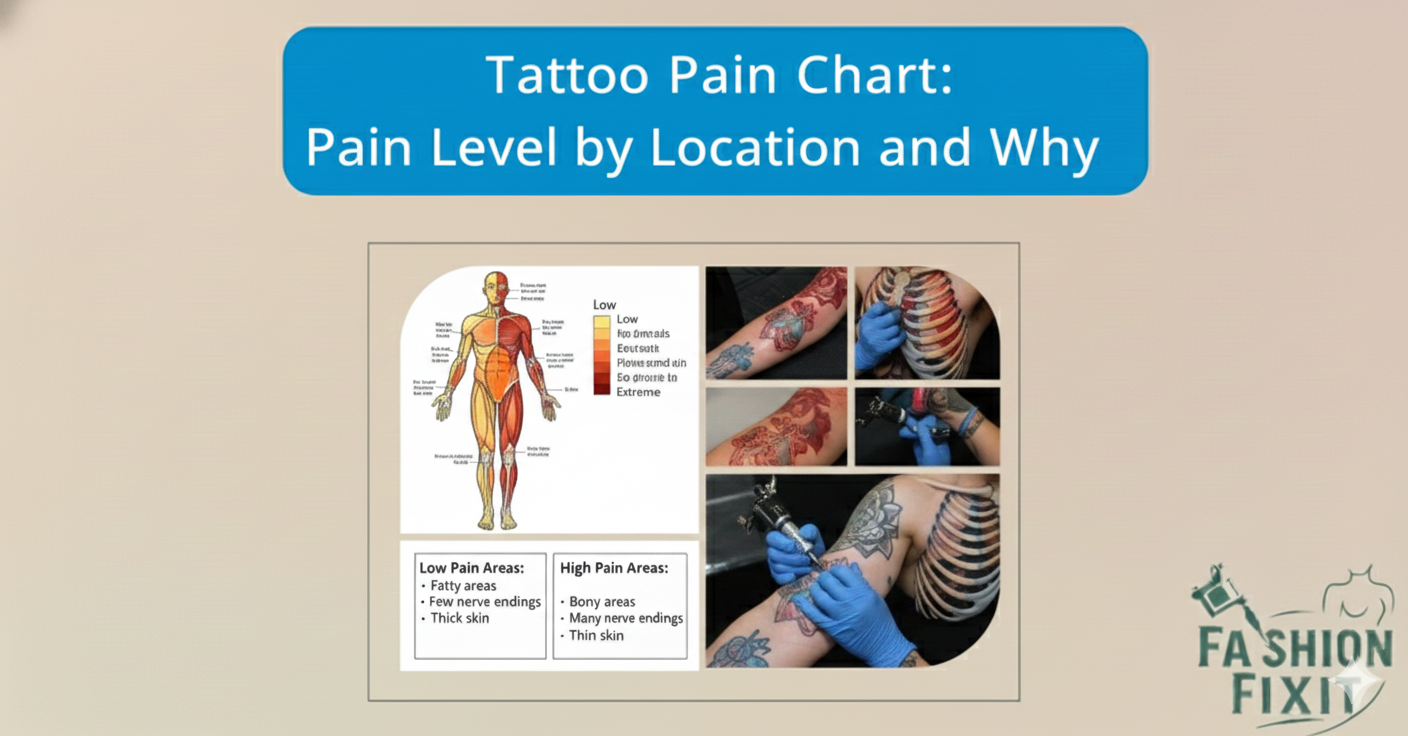
Pain tolerance is a placement factor shaped by nerve concentration and skin sensitivity. Placement decisions account for high-sensation zones such as ribs, sternum and ankles versus lower-sensation regions such as outer arms, thighs and shoulders, which influences design scale and session planning.
Lifestyle Compatibility
Lifestyle compatibility is a placement factor that aligns tattoo visibility with career demands, athletic activity and daily movement. Compatibility-centred placement choices prioritise friction-free zones for athletes, concealment-friendly zones for formal careers and flexible surfaces for individuals who plan future tattoo expansion.
Design Requirements
Design requirements are a placement factor that matches motif complexity with available surface area. Requirement-driven placement decisions include large back panels for detailed compositions, forearms for linear designs and calves for vertical storytelling formats that depend on uninterrupted space.
Why Do Tattoos Mean Different Things to Different People?
Tattoos mean different things to different people because personal history, psychological needs, cultural background, aesthetic preference and social environment shape individual tattoo interpretation. Meaning variation emerges when unique life context interacts with symbolic design, emotional intention and identity structure.
Personal History
Personal history is a meaning-shaping factor that links tattoos to lived experience and formative events. History-based tattoo meaning includes memorial icons, milestone dates and autobiographical motifs that reflect individual memory, emotional narrative and personal transformation.
Psychological Needs
Psychological needs are a meaning-shaping factor that aligns tattoos with internal motivations. Need-driven tattoo meaning includes identity affirmation, emotional grounding, resilience reinforcement and autonomy expression that address self-definition, emotional regulation and long-term psychological stability.
Cultural Background
Cultural background is a meaning-shaping factor that links tattoos to heritage, symbolism and collective identity. Culture-based tattoo meaning includes ancestral motifs, regional symbols and traditional visual systems that reflect cultural values, spiritual beliefs and intergenerational continuity.
Aesthetic Preference
Aesthetic preference is a meaning-shaping factor that connects tattoos to individual style and visual orientation. Aesthetic-based tattoo meaning includes minimalism, realism, geometric design and illustrative composition that reflect personal taste, artistic alignment and fashion-driven identity cues.
Social Environment
Social environment is a meaning-shaping factor that influences how tattoos function within relationships and communities. Environment-based tattoo meaning includes group symbolism, shared motifs, community identity markers and interpersonal connections that reinforce belonging and relational significance.
Life-Stage Context
Life-stage context is a meaning-shaping factor that adapts tattoo interpretation as identity evolves. Stage-dependent tattoo meaning includes early-adulthood discovery symbols, midlife narrative refinement and later-life legacy motifs that shift significance with changing responsibilities, roles and perspectives.
Symbolic Interpretation
Symbolic interpretation is a meaning-shaping factor that personalises universal symbols. Interpretation-based tattoo meaning shows variation in how individuals assign emotional weight, philosophical meaning or spiritual significance to the same motif, resulting in unique symbolic outcomes.
Why Is It Important to Understand the Meaning Behind Tattoos?
Understanding the meaning behind tattoos is important because cognitive context, emotional intention, cultural significance, social interpretation and identity alignment determine how tattoos function in personal and interpersonal settings. Meaning awareness strengthens communication, supports respectful interaction and clarifies the symbolic role of body art.
Cognitive Context
Cognitive context is an importance factor that explains how individuals organise tattoo symbolism within personal belief systems. Context-informed understanding prevents misinterpretation and supports accurate recognition of the intellectual, philosophical or narrative structures embedded in tattoo design.
Emotional Intention
Emotional intention is an importance factor that clarifies the psychological purpose behind symbolic choice. Intention-informed understanding acknowledges grief, resilience, gratitude or healing embedded in tattoos and supports sensitive engagement with emotionally charged motifs.
Cultural Significance
Cultural significance is an importance factor that preserves the integrity of heritage-based tattoo symbolism. Culturally informed understanding respects ancestral motifs, traditional pattern systems and sacred visual forms that carry collective memory, ritual meaning and intergenerational continuity.
Social Interpretation
Social interpretation is an importance factor that shapes interpersonal perception and communication. Interpretation-informed understanding reduces stereotypes, improves social interaction and increases accuracy when reading the social, communal or identity-driven meaning encoded in tattoo placement and design.
Identity Alignment
Identity alignment is an importance factor that recognises the role tattoos play in self-definition. Alignment-informed understanding supports recognition of values, roles, personality traits and internal narratives represented through tattoo symbolism, strengthening empathy and mutual respect.
Ethical Awareness
Ethical awareness is an importance factor that prevents cultural appropriation, misrepresentation and disrespect. Meaning-informed understanding promotes responsible engagement with motifs linked to sacred traditions, protected cultural systems or historically significant communities.
Personal Narrative Integrity
Personal narrative integrity is an importance factor that acknowledges tattoos as structured life-story elements. Narrative-informed understanding respects how tattoos encode milestones, relationships and transformational experiences, preserving symbolic accuracy and validating personal expression.
How Should You Decide If Getting a Tattoo Is Right for You?
You should decide if getting a tattoo is right for you by evaluating personal meaning, long-term relevance, placement suitability, lifestyle compatibility and emotional readiness. Decision clarity emerges when symbolic intention aligns with identity, future goals and body-art expectations.
Personal Meaning
Personal meaning is a decision factor that determines whether a tattoo reflects values, memory or identity structure. Meaning-aligned decisions assess symbolic purpose, emotional significance and narrative role to ensure the tattoo contributes to coherent self-expression rather than impulsive motivation.
Long-Term Relevance
Long-term relevance is a decision factor that evaluates how a tattoo aligns with future identity, goals and life stages. Relevance-driven decision-making includes considering evolving beliefs, professional direction and relational changes to ensure the tattoo maintains stability across future contexts.
Placement Suitability
Placement suitability is a decision factor that examines visibility, anatomical structure and design requirements. Suitability evaluation considers proportional balance, concealment needs and long-term ageing behaviour to ensure the chosen placement supports both aesthetic and practical expectations.
Lifestyle Compatibility
Lifestyle compatibility is a decision factor that aligns tattoo visibility with professional, athletic and social environments. Compatibility assessment includes workplace presentation standards, physical activity friction zones and future tattoo expansion plans to ensure the tattoo remains functional and appropriate.
Emotional Readiness
Emotional readiness is a decision factor that confirms psychological stability and intention clarity. Readiness evaluation includes distinguishing temporary emotional states from long-term motivation and ensuring the tattoo supports identity affirmation rather than reactive decision-making.
Pain and Healing Tolerance
Pain and healing tolerance is a decision factor shaped by individual sensitivity and recovery capacity. Tolerance assessment includes understanding procedure discomfort, aftercare responsibility and healing duration to ensure commitment to the physical process of tattoo acquisition.
Budget and Quality Standards
Budget and quality standards are decision factors that influence safety, artistry and long-term satisfaction. Quality-aligned decisions prioritise licensed studios, experienced artists, hygienic practices and appropriate financial planning to ensure durable execution and reduced regret risk.
Design Certainty
Design certainty is a decision factor that evaluates motif clarity and stylistic direction. Certainty assessment includes reviewing symbolism, scale, line style and thematic coherence to ensure the tattoo supports personal narrative and maintains long-term aesthetic relevance.
Conclusion
Tattoos reflect identity, memory, emotion and culture, which means people choose tattoos for reasons rooted in personal meaning and shaped by social context. Tattoo motivations span identity expression, emotional healing, aesthetic preference, cultural heritage and lifestyle alignment, and each tattoo gains significance through the individual who wears it.
Psychological factors such as self-definition, resilience and autonomy influence why tattoos feel meaningful, while historical and cultural traditions shape how tattoos communicate belonging or spiritual purpose. Modern trends add new layers of meaning through fashion influence, digital visibility, wellness practices and shifting professional norms. Demographic groups, career goals and life stages further guide how people decide on design, placement and long-term relevance. Some people expand into multiple tattoos for narrative continuity or aesthetic cohesion, while others experience regret when symbolism no longer matches identity or expectations.
Understanding tattoo meaning helps explain why tattoos differ so widely from person to person and why tattoos remain powerful tools of expression. The decision to get a tattoo becomes valuable when intention, identity and long-term significance align.